

- Englist



Key Technical Properties of High Purity Graphite Blocks

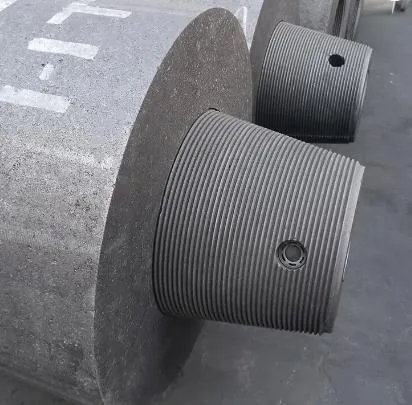
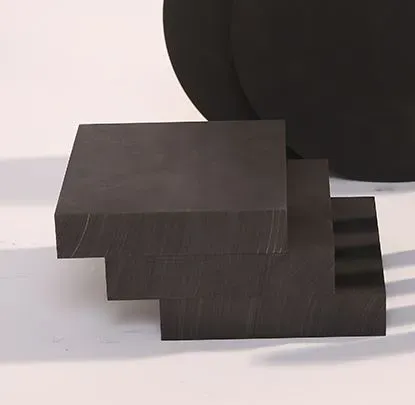
High-purity graphite blocks play a critical role in industries that operate under extreme temperature, chemical, and mechanical conditions. From semiconductor manufacturing and photovoltaic production to metallurgy and high-temperature furnaces, these carbon materials are valued for their exceptional stability and reliability. Understanding the key technical properties of high purity graphite blocks is essential when selecting the right grade for demanding industrial environments. The performance of the final product often depends directly on the material characteristics of the graphite block itself.
Chemical Purity and Impurity Control
The defining feature of a high purity graphite block is its extremely low impurity content. During manufacturing, graphite undergoes a purification process at very high temperatures to remove metallic elements and ash residues. As a result, the carbon content typically reaches 99.9 percent or higher, while metallic impurities are reduced to parts-per-million levels.
This level of purity is especially important in semiconductor and solar applications, where even trace contamination can affect product quality. Metallic impurities may vaporize at elevated temperatures and react with surrounding materials, leading to defects or inconsistent performance. High purity graphite blocks minimize these risks, ensuring stable chemical behavior in vacuum or inert atmospheres. For industries that demand precise and repeatable results, purity is not just a specification but a critical operational requirement.
Exceptional High-Temperature Resistance
One of the most important technical properties of high purity graphite blocks is their ability to withstand extremely high temperatures. Unlike many materials, graphite does not melt under standard atmospheric pressure. Instead, it sublimates at temperatures above approximately 3600 degrees Celsius. In controlled environments such as vacuum or inert gas conditions, graphite blocks can safely operate at temperatures exceeding 2500 degrees Celsius without structural failure.
This outstanding temperature resistance makes high purity graphite blocks ideal for applications such as sintering furnaces, crystal growth systems, and continuous casting processes. The material maintains structural integrity even under prolonged exposure to heat, which ensures dimensional stability and consistent mechanical performance. In high-temperature industrial settings, this reliability directly contributes to operational efficiency and reduced downtime.
Thermal Conductivity and Heat Distribution
Thermal conductivity is another key technical property that distinguishes high purity graphite blocks from other refractory materials. Graphite efficiently conducts heat, allowing temperature to distribute evenly across the entire block. Uniform heat distribution reduces thermal gradients that could otherwise cause internal stress or cracking.
In practical applications, good thermal conductivity improves energy efficiency and process consistency. For example, in furnace components or heating elements, even heat transfer ensures that materials are processed uniformly. This is particularly important in precision manufacturing environments where temperature variations can result in product defects. High purity graphite blocks provide predictable thermal behavior, which enhances both performance and safety.
Electrical Conductivity and Functional Applications
In addition to thermal conductivity, high purity graphite blocks also exhibit excellent electrical conductivity. This property makes them suitable for electrical discharge machining electrodes, heating elements, and electrochemical systems. The combination of electrical and thermal conductivity allows graphite to perform multiple functions within a single system.
In high-temperature reactors or industrial furnaces, graphite blocks may serve as structural components while simultaneously conducting electrical current. The material’s ability to maintain stable electrical performance under extreme heat further expands its range of applications. This dual functionality is one reason why carbon graphite blocks remain indispensable in advanced manufacturing sectors.
Mechanical Strength and Structural Stability
Although graphite is not as strong as steel in conventional mechanical terms, high purity graphite blocks offer sufficient compressive and flexural strength for demanding high-temperature environments. More importantly, they retain their strength even when exposed to extreme heat, where many metals would soften or deform.
The manufacturing process significantly influences mechanical properties. Isostatically pressed graphite blocks typically provide uniform strength in all directions, while extruded graphite blocks may exhibit directional strength characteristics. Controlled grain size and density contribute to structural integrity and resistance to cracking. When selecting a graphite block for sale, understanding these structural characteristics ensures that the material will withstand operational loads and thermal cycling without premature failure.
Density, Porosity, and Microstructure Control
Density and porosity are closely related technical properties that affect the durability and oxidation resistance of high purity graphite blocks. A higher density and lower open porosity generally result in improved mechanical performance and reduced gas penetration. Controlled microstructure ensures that the graphite block behaves consistently under high temperatures and mechanical stress.
Lower porosity also enhances resistance to oxidation in environments where trace oxygen may be present. Gas infiltration through open pores can accelerate material degradation, so controlling this factor extends service life. For precision applications such as semiconductor processing equipment, consistent microstructure and density are essential for maintaining clean and stable operating conditions.
Oxidation Resistance and Environmental Performance
While graphite performs exceptionally well at high temperatures in inert or vacuum conditions, it can oxidize when exposed to oxygen at elevated temperatures. For this reason, high purity graphite blocks are often used in controlled atmospheres. In situations where oxidation risk exists, surface treatments or protective coatings may be applied to enhance durability.
Understanding the operating environment is crucial when selecting the appropriate graphite grade. If the application involves continuous exposure to air at high temperatures, additional protective measures may be required. However, in properly controlled industrial systems, high purity graphite blocks demonstrate outstanding long-term stability and resistance to chemical attack.
Machinability and Customization Capability
Another important property of high purity graphite blocks is their excellent machinability. Despite their strength and thermal resistance, they can be precisely machined into complex shapes using conventional CNC equipment. This allows manufacturers to produce custom graphite components such as molds, crucibles, heater elements, and structural supports.
The ability to machine graphite with high precision reduces production costs and shortens lead times. It also allows engineers to design components that optimize heat flow, mechanical support, and spatial efficiency. This adaptability makes high purity graphite blocks suitable for a wide range of customized industrial applications.
Long-Term Performance and Cost Efficiency
Although high purity graphite blocks may involve a higher initial investment compared to lower-grade carbon materials, they often deliver superior long-term value. Their chemical stability, thermal resilience, and structural consistency reduce the frequency of replacement and minimize unexpected downtime. Over time, this reliability translates into lower operational costs and improved productivity.
In industries where process stability and product quality are critical, the technical properties of the graphite block directly influence overall system performance. Selecting a material based solely on price can lead to higher maintenance expenses and production losses. Evaluating purity, density, strength, and thermal characteristics ensures a balanced decision that supports both performance and cost efficiency.
Conclusion
High purity graphite blocks are engineered materials designed to perform in some of the most demanding industrial environments. Their key technical properties include exceptional chemical purity, extreme temperature resistance, strong thermal and electrical conductivity, reliable mechanical strength, controlled density and porosity, and excellent machinability. Together, these characteristics make carbon graphite blocks indispensable in advanced manufacturing sectors.
When selecting a high purity graphite block, it is essential to match these technical properties to the specific requirements of your application. By understanding how each property affects performance, manufacturers and engineers can make informed decisions that ensure durability, efficiency, and long-term operational success.
 Pervious
 Next
Next