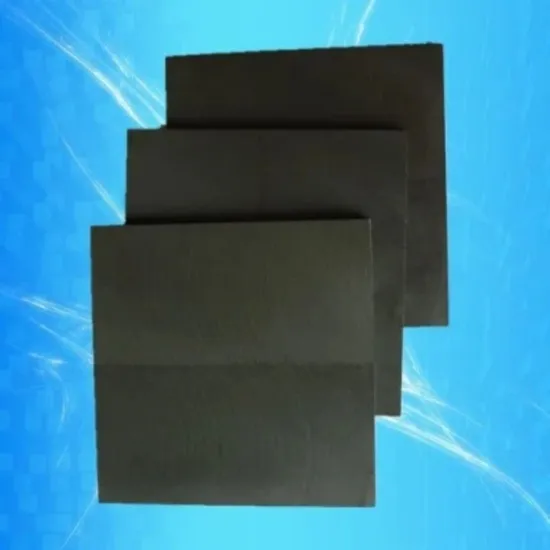


Analyze High Grade Graphite and calcined petroleum coke price trend
Procuring high-grade graphite blocks requires a deep understanding of raw material stability and its impact on finished product performance. At the core of this manufacturing process is the selection of premium petroleum coke, where the carbon content must exceed 99% to ensure structural integrity. For industrial buyers, the volatility of the calcined petroleum coke price trend directly influences the cost-effectiveness and availability of isostatic and molded graphite components used in high-temperature environments.
Whether utilized in diamond tool pressure sintering or semiconductor applications, the quality of the carbon source determines the block's density and thermal conductivity. By integrating advanced isostatic forming techniques with strictly controlled raw materials, manufacturers can provide customized graphite solutions that withstand temperatures exceeding 3000 degrees Celsius while maintaining precise machining accuracy for critical industrial dies and crucibles.

The Role of High-Purity Petroleum Coke in Graphite Block Performance
The physical properties of a graphite block are intrinsically linked to the quality of its precursor. Using domestic petroleum coke with a carbon purity above 99%, the resulting graphite structures achieve the high density (1.85g/cm³ to 1.88g/cm³) necessary for industrial-grade applications. The crystalline morphology—specifically compact crystalline graphite—ensures that the material remains stable under extreme thermal stress.
Key technical advantages of using high-purity coke include:
- Superior Thermal Management: High thermal conductivity (≥120-130 W/m.K) allows for efficient heat dissipation in EDM and solar technology applications.
- Structural Stability: A low coefficient of thermal expansion (C.T.E ≤ 2.5 x 10⁻⁶/ºC) minimizes the risk of cracking during rapid temperature cycles.
- Chemical Inertness: Stable chemical properties make these blocks ideal for chemical industry reactors where reactivity must be minimized.
From a procurement perspective, monitoring the calcined petroleum coke price trend is essential because raw material costs often dictate the pricing of specialized isostatic graphite, which requires more intensive processing than standard vibrated or molded blocks.

Engineering Applications and Scenario-Specific Requirements
Graphite blocks are not one-size-fits-all components; their utility depends on the matching of material grade to the operational environment. In diamond tool pressure sintering, the block must provide uniform heat distribution and immense compressive strength (≥24-31 MPa) to ensure the sintering process is consistent across the entire tool surface.
In the metallurgical sector, specifically for continuous casting dies for aluminum, copper, and brass, the self-lubricating nature of graphite reduces friction and wear, extending the lifespan of the die. Meanwhile, in the semiconductor and solar technology sectors, the focus shifts toward high purity and low ash content (≤0.3%) to prevent contamination of the silicon wafers.
For EDM (Electrical Discharge Machining) applications, the priority is low electric resistance (≤8-8.5 μΩ.m). This ensures a stable spark gap and high machining accuracy, allowing for the creation of complex geometries in hard metals. Shijiazhuang Nalai Biotechnology Co., Ltd leverages its technical expertise to machine these blocks into specific custom shapes, ensuring that the final product meets the exact tolerances required by the end-user.
Comparing Manufacturing Methods: Isostatic, Molded, and Vibrated
Selecting the right forming method is critical for the end-use performance of the graphite block. Isostatic graphite is produced by applying equal pressure from all directions, resulting in a homogeneous structure with uniform physical properties. This is the gold standard for high-precision semiconductor components and aerospace applications where isotropic behavior is mandatory.
Molded and vibrated graphite blocks offer a more cost-effective alternative for applications where extreme uniformity is less critical but high volume and basic structural strength are required. These are frequently used in degassing rods, simple crucibles, and sealing rods. The primary trade-off involves the balance between mechanical strength and production cost.
When evaluating suppliers, buyers should consider the manufacturer's capacity to scale. With a production capacity of 3000 tons per month and a team of 30 technicians and 360 skilled workers, our facility can handle both large-scale industrial orders and highly specific custom prototypes. This vertical integration from raw material processing to final machining ensures a consistent quality control system across all grades of graphite blocks.
Technical Specifications and Performance Metrics
| Performance Parameter | Industrial Grade (Standard) | Premium Grade (High-Perf) | Evaluation Criterion |
|---|---|---|---|
| Bulk Density (g/cm³) | ≥1.70 | ≥1.73 | Higher density improves strength |
| Electric Resistance (μΩ.m) | ≤8.5 | ≤8 | Lower resistance for EDM efficiency |
| Bending Strength (MPa) | ≥10 | ≥12 | Higher strength for structural loads |
| Thermal Conductivity (W/m.K) | ≥120 | ≥130 | Critical for heat exchange apps |
| Ash Content (%) | ≤0.3 | ≤0.3 | Low impurity for semiconductor use |
Procurement Considerations for Global Graphite Sourcing
For procurement managers in Europe, North America, and Southeast Asia, sourcing graphite requires a balance of lead time, shipping costs, and material certification. Because graphite is fragile and heavy, transport packaging—typically reinforced wooden boxes—is essential to prevent edge chipping during international transit via ports like Tianjin.
Key factors to evaluate when selecting a supplier include:
- Customization Capability: The ability to machine blocks to specific dimensions (e.g., from φ560mm up to 2100mm lengths) without compromising the internal structure.
- Lead Time Stability: Understanding the difference between peak season (approx. one month) and off-season lead times (1-3 months) to maintain inventory levels.
- Payment and Trade Terms: Availability of flexible Incoterms (FOB, EXW, CFR, CIF) and payment methods such as LC or Western Union to facilitate smooth cross-border transactions.
Reliability is further ensured by a strict quality control system that monitors the carbon content and grain size (typically around 297μm) throughout the production cycle. This prevents the delivery of inhomogeneous blocks that could fail prematurely under high thermal shock.
Future Trends in Carbon Material Application and Sourcing
The demand for graphite blocks is evolving with the rise of green energy and advanced electronics. Solar technology and semiconductor manufacturing are driving the need for ultra-high purity graphite with even lower ash content and higher homogeneity. We expect a shift toward more isostatic forming processes as precision requirements increase across the automotive and aerospace industries.
Furthermore, as the global supply chain becomes more complex, buyers are increasingly looking for manufacturers who can provide a "total production solution"—integrating design, development, trial production, and final delivery. The ability to iterate designs quickly through trial production is becoming a competitive advantage for companies seeking to optimize their die and mold efficiency.
Ultimately, the stability of the calcined petroleum coke price trend will remain a primary external factor for the industry. Strategic partnerships with manufacturers who have a diversified supply chain and large-scale production capacity (like the 150,000 tons of calcined coke capacity) are the best way to mitigate price volatility and ensure a consistent supply of high-performance graphite components.
Frequently Asked Questions About Industrial Graphite Blocks
What is the difference between isostatic and molded graphite blocks?
Isostatic graphite is formed using equal pressure from all directions, creating a uniform, isotropic structure with consistent properties throughout. Molded graphite is pressed in a specific direction, resulting in anisotropic properties where strength and conductivity may vary by axis. Isostatic is preferred for high-precision applications.
Can graphite blocks be machined to custom shapes?
Yes, we provide comprehensive customization services. Graphite blocks can be machined into specific shapes, diameters, and dimensions according to customer requirements, including holes, grooves, and complex geometries for dies and molds.
What is the maximum temperature a graphite block can withstand?
Our industrial-grade graphite blocks are designed to withstand temperatures exceeding 3000 degrees Celsius, making them ideal for extreme high-temperature environments like crucibles and sintering dies.
How does ash content affect the quality of the graphite?
Ash content represents the inorganic impurities in the graphite. High ash content can lead to contamination in semiconductor processes or reduce the purity of melted metals in crucibles. We maintain an ash content of ≤0.3% to ensure high purity.
What are the typical lead times for international orders?
Lead times vary by season. During peak seasons, the average lead time is approximately one month, while during off-seasons, it typically ranges from 1 to 3 months depending on the order volume and customization complexity.
Which industries most commonly use these graphite blocks?
They are widely used in mechanical engineering, electronics, the chemical industry, solar technology, semiconductor manufacturing, and EDM applications, as well as for continuous casting dies in the metallurgy industry.
Technical References and Industry Standards
- ISO Standards for Carbon and Graphite Materials
- ASTM International Specifications for Industrial Graphite
- Research on Isostatic Pressing of Petroleum Coke
- Electrical Conductivity Standards for EDM Graphite
For companies requiring high-precision graphite components, selecting a manufacturer with integrated raw material control and extensive machining experience is key to operational success. Contact our technical team to discuss your specific application requirements and receive a customized production solution.
Related Technical Insights