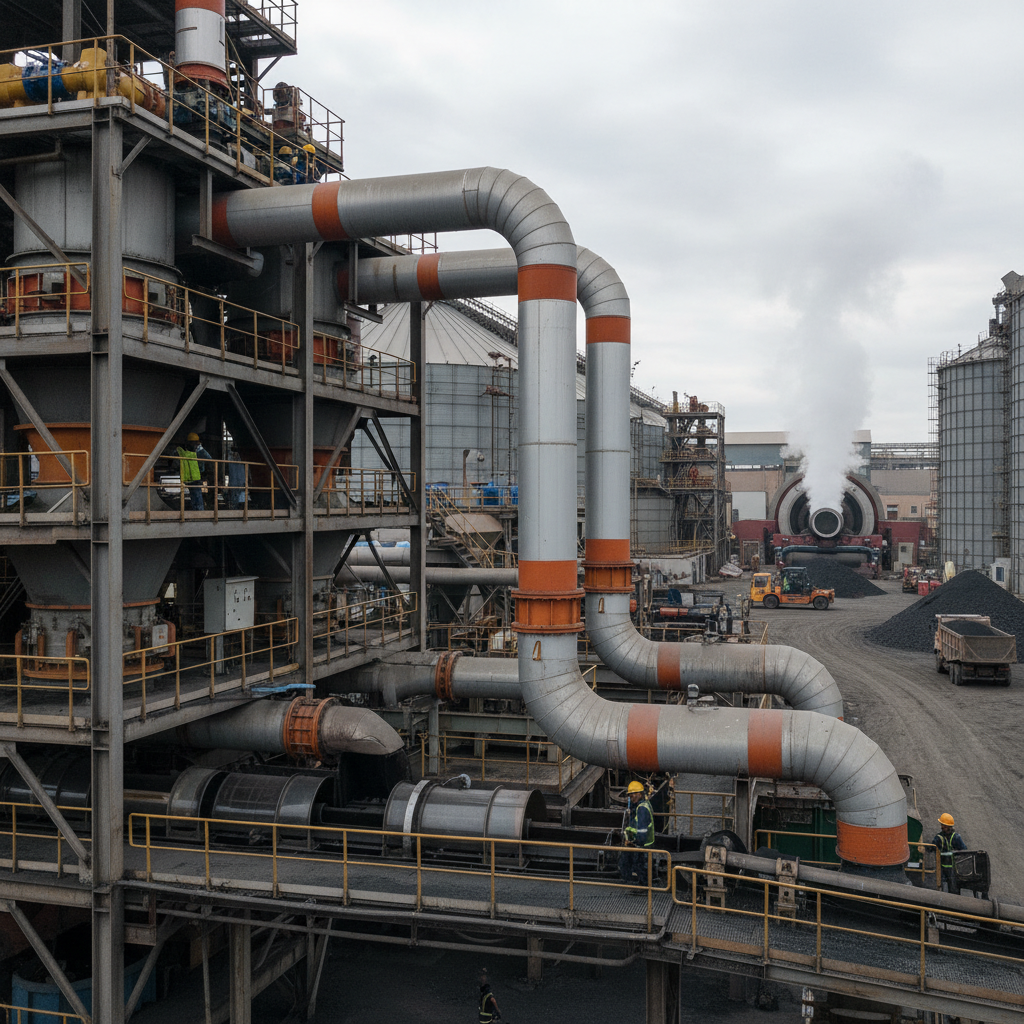


Fluctuations in petcoke prices per ton directly impact the operational costs of aluminum smelting, steel foundries, and carbon product manufacturing. As a critical carbon source with high calorific value and fixed carbon content, petroleum coke serves as the foundational raw material for various industrial anodes and carburizing agents, making price transparency essential for procurement planning.
Procurement managers often struggle with the volatility of the carbon market, where energy costs and refinery outputs cause rapid price shifts. Understanding the specific drivers behind these costs—such as sulfur content and fixed carbon percentages—allows buyers to optimize their sourcing strategy and avoid overpaying for specifications that exceed their technical requirements.
This analysis provides a comprehensive framework for evaluating petroleum coke costs, examining the relationship between material purity and market value, and offering a decision-making guide for selecting the right grade of coke for metallurgical and battery applications.

Primary Drivers of Petroleum Coke Pricing

The cost of petroleum coke is not monolithic; it is dictated by the refinement process of vacuum residue and the resulting chemical composition. The primary driver is the balance between supply from oil refineries and demand from the aluminum and steel industries. When refinery throughput increases or vacuum residue processing methods change, the availability of high-grade calcined coke shifts, causing immediate price adjustments per ton.
Logistics and energy costs for calcination also play a significant role. Since raw green coke must often be heated to remove volatile matter, the price of the final product incorporates the energy expenditures of the calcining furnace. Buyers sourcing from regions with high energy costs typically see a premium reflected in the final quoted price.
The Impact of Fixed Carbon and Purity on Value
In the carbon products industry, purity is the most direct correlate to price. Petroleum coke with a fixed carbon content of 98.5% or higher, such as the materials produced by Shijiazhuang Nalai Biotechnology Co., Ltd, commands a higher market value due to its efficiency in metallurgical processes. Higher fixed carbon means less waste and higher thermal efficiency during smelting.
Conversely, impurities such as sulfur and ash act as price depressors. High sulfur content can contaminate the final metal product, requiring more expensive refining steps. Therefore, "low-sulfur" grades are treated as premium commodities, while "high-sulfur" grades are relegated to lower-value fuel applications, creating a wide price gap between industrial-grade and fuel-grade petcoke.
Application-Specific Cost Requirements
Different industrial applications have different tolerances for purity, which in turn dictates the budget. For instance, in the production of graphite electrodes or anodes for aluminum smelting, the requirement for high-density and low-volatile matter is absolute. In these cases, the higher cost per ton is justified by the prevention of electrode breakage and reduced energy consumption in the electrolytic cell.
In contrast, using petroleum coke as a carburizing agent in steel foundries allows for a broader range of specifications. Here, the primary concern is the carbon addition rate. Buyers in this segment often prioritize a balance between fixed carbon content and cost, opting for customized sizes (such as 1-5mm) that optimize the melting process without requiring the ultra-high purity needed for battery cathodes or precision graphite blocks.
Relative Cost Weighting by Material Grade
To understand how different grades affect the bottom line, we can examine a relative cost index. This illustrative framework shows how increasing purity and decreasing sulfur levels correlate with the normalized price increase across common industrial grades of petroleum coke.
As shown in the conceptual data, the jump from Fuel Grade to Industrial Grade is significant, but the move to Ultra-High Purity (required for lithium-ion battery cathodes or specialized graphite crucibles) represents the highest price premium due to the intensive processing required to reach near-zero impurity levels.
Total Cost of Ownership Beyond the Per-Ton Price
Focusing solely on the quoted price per ton can be a costly mistake. The Total Cost of Ownership (TCO) includes the efficiency of the material in the production line. For example, a cheaper coke with 95% fixed carbon will require more material to achieve the same carbon saturation as a premium coke with 98.8% fixed carbon, effectively increasing the "cost per unit of carbon" delivered.
Additionally, the physical form of the coke—such as the honeycomb structure and pore distribution—affects its reactivity and strength. Materials with better structural integrity reduce waste during transport and handling, and improve the performance of resultant products like electrode paste or graphite rods, reducing the overall cost of scrap and rework in the manufacturing cycle.
Procurement Risks in the Carbon Material Market
The carbon material market is subject to several risks that can lead to unexpected price hikes. One major risk is the volatility of the petroleum residue market; since petcoke is a byproduct, any change in refinery capacity or the shift toward cleaner fuels can shrink the available supply of vacuum residue, driving up the cost of the resulting coke.
Another risk involves quality inconsistency. If a supplier provides a batch with higher-than-specified sulfur or ash, it can lead to failures in the final product, such as cracks in a graphite crucible or contaminated steel. For industrial buyers, the risk of production downtime far outweighs the savings gained from sourcing the lowest per-ton price from an unverified supplier.
Strategic Sourcing Framework for Industrial Buyers
To optimize procurement, buyers should categorize their needs based on the technical demands of their application. The following comparison framework illustrates how to align material selection with budget and performance goals.
| Application Type | Priority Spec | Price Sensitivity | Key Risk |
|---|---|---|---|
| Steel Foundry | Fixed Carbon % | High | Carbon recovery rate |
| Aluminium Anodes | Low Sulfur/Ash | Medium | Electrode consumption |
| Battery Cathode | Ultra-High Purity | Low | Conductivity failure |
| Graphite Blocks | Bulk Density | Medium | Structural porosity |
| Fuel/Heating | Calorific Value | Very High | Emission compliance |
| Glass Casting | Thermal Stability | Medium | Thermal shock/cracks |
By using this matrix, procurement teams can avoid over-specifying materials for low-criticality applications and ensure that high-performance components are sourced with the necessary purity, regardless of the higher per-ton cost.
Frequently Asked Questions
The most significant volatility comes from crude oil refinery outputs and global energy prices. Because petroleum coke is a byproduct of the refining process, changes in the demand for gasoline or diesel can alter the volume of vacuum residue available, which directly shifts the supply and price of petcoke.
Higher fixed carbon percentages, such as 98.8%, increase the material's value because they provide better thermal efficiency and less waste during smelting. Materials with lower fixed carbon are generally cheaper but less efficient for metallurgical use.
Generally, yes. Low-sulfur grades require more intensive processing or specific feedstocks, making them more desirable for industries like aluminum smelting where sulfur contamination must be minimized. This higher demand and production cost lead to a premium price.
Calcined coke is more expensive because it has undergone a thermal process to remove volatile organic compounds. This adds energy costs and processing time, resulting in a more stable, higher-purity product suitable for industrial anodes.
Verification is typically done through third-party inspection services such as SGS, B.V., or Intertek. These agencies test for fixed carbon content, sulfur levels, ash percentage, and moisture to ensure the material matches the quoted specifications before payment is finalized.
Yes, since petroleum coke is a bulk commodity, shipping costs (FOB, CIF, CFR) can represent a large percentage of the total cost. The distance from the production facility to the port and the final destination significantly affects the delivered price per ton.
Conclusion
Managing the cost of petroleum coke requires a shift in focus from the raw price per ton to a value-based analysis of purity, fixed carbon content, and application suitability. By understanding the drivers of price volatility and the technical trade-offs between material grades, industrial buyers can optimize their procurement to ensure both cost-efficiency and product quality.
For organizations seeking high-specification carbon materials or customized petroleum coke solutions, reviewing the technical capabilities and production capacity at www.nlgraphite.com can help align sourcing with specific industrial requirements.