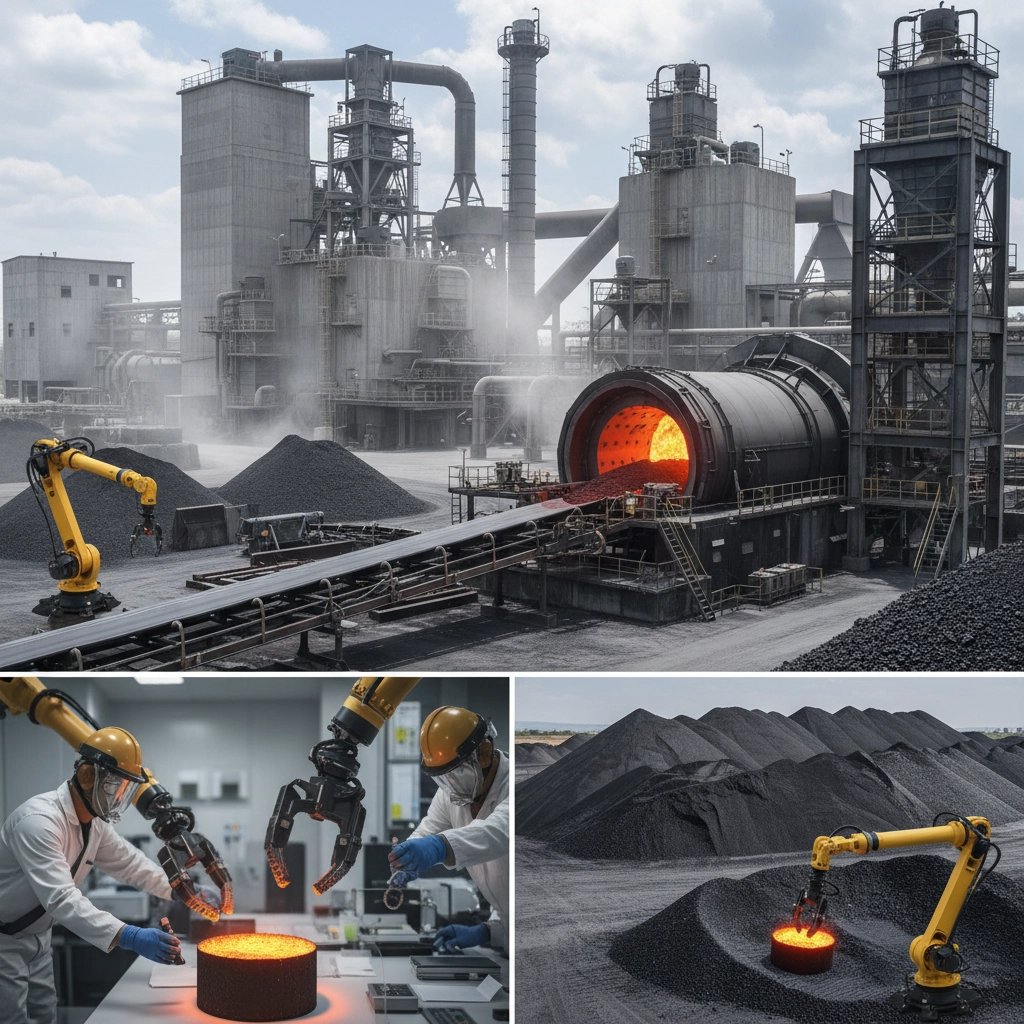
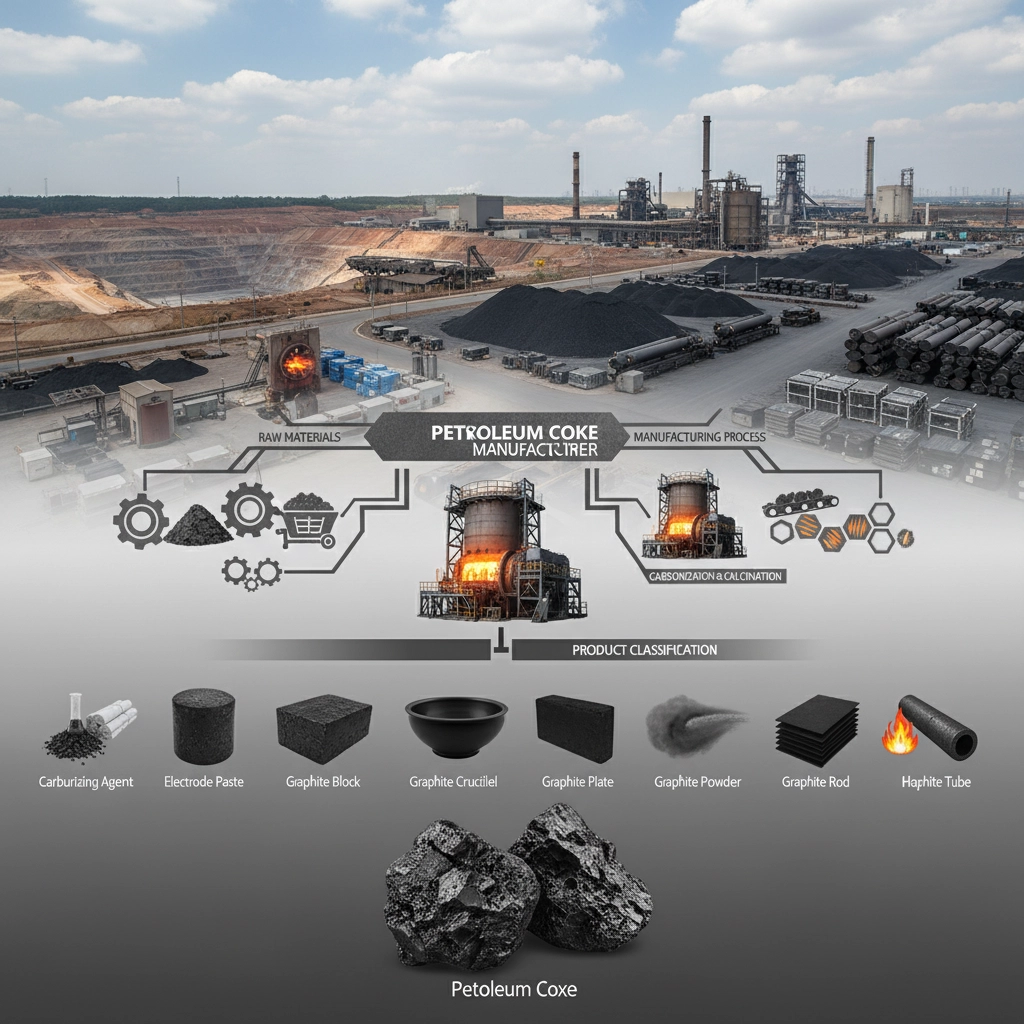
The role of a specialized petroleum coke manufacturer is fundamental to the stability of the global metallurgical and chemical industries. As a high-carbon byproduct of the oil refining process, petroleum coke serves as a critical raw material for the production of electrodes, anodes, and various graphite-based products, ensuring that high-temperature industrial processes remain efficient and sustainable.
Understanding the nuances of petroleum coke production allows industries to optimize their carbon footprints and improve the purity of their end-products. Whether it is used as a carburizing agent in steelmaking or as the primary feedstock for graphite electrodes, the quality provided by a professional petroleum coke manufacturer directly impacts the structural integrity of the resulting alloys and materials.
Globally, the demand for high-grade calcined petroleum coke continues to rise as emerging economies expand their infrastructure. By bridging the gap between refinery outputs and industrial requirements, a leading petroleum coke manufacturer transforms a refining byproduct into a strategic asset that powers the modern world's most demanding heat-treatment and smelting operations.
The Industrial Significance of a Petroleum Coke Manufacturer
The strategic importance of a petroleum coke manufacturer cannot be overstated in the context of the global aluminum and steel sectors. By providing the necessary carbon source for anodes and electrodes, these manufacturers enable the electrolytic reduction of alumina and the precise carburization of specialty steels, which are the building blocks of modern aerospace and automotive engineering.
Beyond basic smelting, the precision with which a petroleum coke manufacturer processes "green coke" into "calcined coke" determines the electrical conductivity and thermal stability of the final product. This technical transition is vital for minimizing energy loss in electric arc furnaces, thereby reducing operational costs and enhancing the overall productivity of heavy industrial zones worldwide.
Defining the Role of a Petroleum Coke Manufacturer
In simple technical terms, a petroleum coke manufacturer is an entity that processes the heavy residue from the delayed coking process of a refinery into a usable industrial carbon product. This involves the removal of volatile organic compounds through a process called calcination, transforming the raw carbon into a hard, porous material suitable for high-temperature applications.
This role is intrinsically linked to the concept of circular economy within the petrochemical industry. Instead of treating the bottom-of-the-barrel residue as waste, the petroleum coke manufacturer elevates it to a high-value material. This transformation supports the production of Graphite Blocks, Graphite Rods, and Electrode Pastes, which are essential for the global electronics and energy sectors.
Modern industrial needs, particularly the shift toward high-performance alloys, require a level of purity that only a specialized manufacturer can provide. By controlling sulfur levels and ash content, these producers ensure that the carbon added to molten metal does not introduce impurities that could lead to structural failure in critical infrastructure.
Core Quality Metrics for Petroleum Coke Production
Durability and thermal resistance are the primary benchmarks used to evaluate any petroleum coke manufacturer. The ability of the coke to withstand extreme temperatures without excessive oxidation is crucial for the longevity of Graphite Crucibles and Graphite Tubes used in vacuum furnaces and semiconductor processing.
Scalability and consistency in sulfur content are where a top-tier petroleum coke manufacturer distinguishes itself. High sulfur levels can contaminate steel and aluminum, leading to brittle materials; therefore, the implementation of advanced desulfurization techniques is a non-negotiable standard for high-grade industrial supply chains.
Cost efficiency is achieved not through the reduction of quality, but through the optimization of the calcination process. By maximizing the heat recovery during the thermal treatment of coke, a petroleum coke manufacturer can lower the price point for the end-user while maintaining the rigorous E-E-A-T standards required for industrial certification.
Comparative Analysis of Petroleum Coke Manufacturing Methods
The methodology employed by a petroleum coke manufacturer varies significantly based on the intended end-use of the product. For instance, the production of needle coke—used specifically for high-power graphite electrodes—requires a meticulous control of the molecular orientation of the carbon atoms, whereas fuel-grade coke focuses more on caloric value and bulk volume.
These different approaches result in varying performance levels in terms of electrical conductivity, mechanical strength, and chemical purity. The following data illustrates how different manufacturing focuses impact the final rating of the petroleum coke produced.
Performance Metrics by Petroleum Coke Manufacturer Specialization
Global Applications and Industrial Use Cases
The output from a petroleum coke manufacturer finds its way into diverse real-world contexts, from the massive aluminum smelters of the Middle East to the precision graphite paper manufacturers in East Asia. In the aluminum industry, calcined petroleum coke is the primary ingredient for carbon anodes, where it provides the electrical conductivity necessary to break the bond between aluminum and oxygen.
Furthermore, in remote industrial zones where traditional coal is unavailable or too impure, the high-energy density of processed petroleum coke makes it an ideal fuel source for cement kilns and lime production. This versatility ensures that the supply chain managed by a petroleum coke manufacturer supports everything from basic building materials to high-tech Graphite Plates used in aerospace heat shields.
Long-Term Value and Sustainability Advantages
Partnering with a reliable petroleum coke manufacturer provides tangible long-term value through the stabilization of raw material costs. By securing a consistent supply of high-purity carbon, companies can reduce the frequency of equipment failure in their furnaces, leading to lower maintenance costs and increased operational safety.
From a sustainability perspective, the ability of a petroleum coke manufacturer to refine refinery waste into a productive industrial material reduces the reliance on mined anthracite or other virgin carbon sources. This logical approach to resource management not only protects the environment but also enhances the corporate social responsibility (CSR) profile of the end-user.
Ultimately, the trust built between an industrial plant and its petroleum coke manufacturer is rooted in innovation. As manufacturers develop new ways to lower emission levels during the calcination process, they provide their clients with "green carbon" alternatives, ensuring that the heavy industry can coexist with stricter global environmental regulations.
Future Trends in Petroleum Coke Manufacturing
The future of the petroleum coke manufacturer is being reshaped by the digital transformation of the refinery. Automation and AI-driven process control are now being used to predict the quality of the coke based on the initial crude oil feedstock, allowing for real-time adjustments that ensure a perfectly consistent carbon structure.
Moreover, the industry is moving toward "Zero-Emission Calcination." Innovative petroleum coke manufacturers are experimenting with electric heating elements powered by renewable energy to replace the combustion of fuel gas during the thermal treatment phase, significantly reducing the carbon footprint of the production process.
As the world shifts toward a hydrogen economy, the demand for specialized graphite components (such as those used in hydrogen fuel cells) will increase. This provides a significant opportunity for the petroleum coke manufacturer to pivot toward ultra-high-purity synthetic graphite production, ensuring their relevance in a post-fossil-fuel era.
Comparison of Petroleum Coke Product Specifications and Applications
| Product Grade |
Carbon Purity |
Key Application |
Industrial Rating |
| Needle Coke |
> 99.9% |
Graphite Electrodes |
10/10 |
| Calcined Coke |
98.5% - 99.5% |
Aluminum Anodes |
9/10 |
| Green Coke |
95% - 97% |
Raw Feedstock |
6/10 |
| Fuel Grade Coke |
< 95% |
Cement Kilns |
7/10 |
| Low-Sulfur Coke |
99% |
Steel Carburizing |
8/10 |
| Specialty Graphite |
> 99.99% |
Semiconductor Parts |
10/10 |
FAQS
A petroleum coke manufacturer produces the carbon feedstock (coke) through refining and calcination. A graphite producer takes that coke and subjects it to extreme heat (graphitization) to align the carbon atoms into a crystalline structure. Essentially, the coke manufacturer provides the essential raw material that the graphite producer refines into high-end products like Graphite Blocks or Rods.
The purity, specifically the sulfur and ash content, is critical. A high-quality petroleum coke manufacturer ensures low sulfur levels, which prevents "hot shortness" (brittleness) in steel. Using impure coke can lead to internal voids and structural weaknesses in the final steel product, making the manufacturer's quality control vital for safety-critical applications.
While coke is a byproduct of oil refining, the process is an example of industrial symbiosis. By converting a refinery waste stream into a useful industrial material, a petroleum coke manufacturer reduces the need for traditional mining. Furthermore, modern producers are implementing carbon capture and electric calcination to further reduce their environmental impact.
A reliable manufacturer should provide detailed Certificates of Analysis (CoA) for every batch, showing precise levels of sulfur, ash, and carbon. They should also possess ISO certifications for quality management and have a proven track record of supplying materials that meet the strict specifications of the aluminum or steel industries.
Not in all cases. While it has a high caloric value, petroleum coke has different combustion characteristics and higher sulfur levels than some coals. However, in industries like cement and lime production, a petroleum coke manufacturer can provide a cost-effective and highly efficient fuel alternative, provided the plant has the appropriate emission control systems.
Importing requires strict adherence to maritime shipping regulations for bulk solids and customs declarations. Companies should ensure the manufacturer provides all necessary MSDS (Material Safety Data Sheets) and ensure that the packaging (whether bulk or bagged) is suitable for long-distance transit to prevent contamination and moisture absorption.
Conclusion
The synergy between a specialized petroleum coke manufacturer and the broader industrial sector is a cornerstone of modern manufacturing. From ensuring the purity of specialty steels to providing the conductive backbone for aluminum production, the technical expertise involved in processing petroleum coke transforms a simple byproduct into a strategic industrial asset. By focusing on quality metrics such as low sulfur content and precise calcination, these manufacturers drive efficiency and reliability across the global supply chain.
Looking forward, the evolution toward greener production methods and the integration of AI in quality control will further elevate the standards of the industry. As we transition toward high-tech materials and sustainable energy, the role of the petroleum coke manufacturer will remain pivotal in providing the carbon foundations for the next generation of graphite and alloy innovations. For those seeking premium carbon solutions, we invite you to visit our website: www.nlgraphite.com