Look, I've been running around construction sites for twenty years, and let me tell you, things are changing. Everyone's obsessed with prefabrication now, modular stuff, trying to build more offsite. It's all about speed, you know? But it's not always as simple as it looks. There's a whole lot of detail that gets missed when you're just looking at blueprints. And honestly, the pressure to cut costs… it leads to shortcuts.
What’s really caught my eye lately is the push for sustainable materials. Not just for the greenwashing, but because it has to happen. Regulations are getting tighter, and frankly, clients are starting to care. It's funny, though. They want 'eco-friendly', but they still want it cheap.
You wouldn't believe the number of engineers who've never actually touched the materials they specify. They see a spec sheet, a nice CAD drawing, and boom, it's in the build.
The Rise of Prefabrication and Material Trends
Prefabrication is huge. I mean, huge. But have you noticed? It often means swapping out materials. You're going from solid steel to lighter gauge, using more composites. It’s not necessarily bad, it’s just… different. And it puts a strain on everything downstream. You start using different adhesives, different sealants. And then, weirdly, you get corrosion issues you wouldn't have expected.
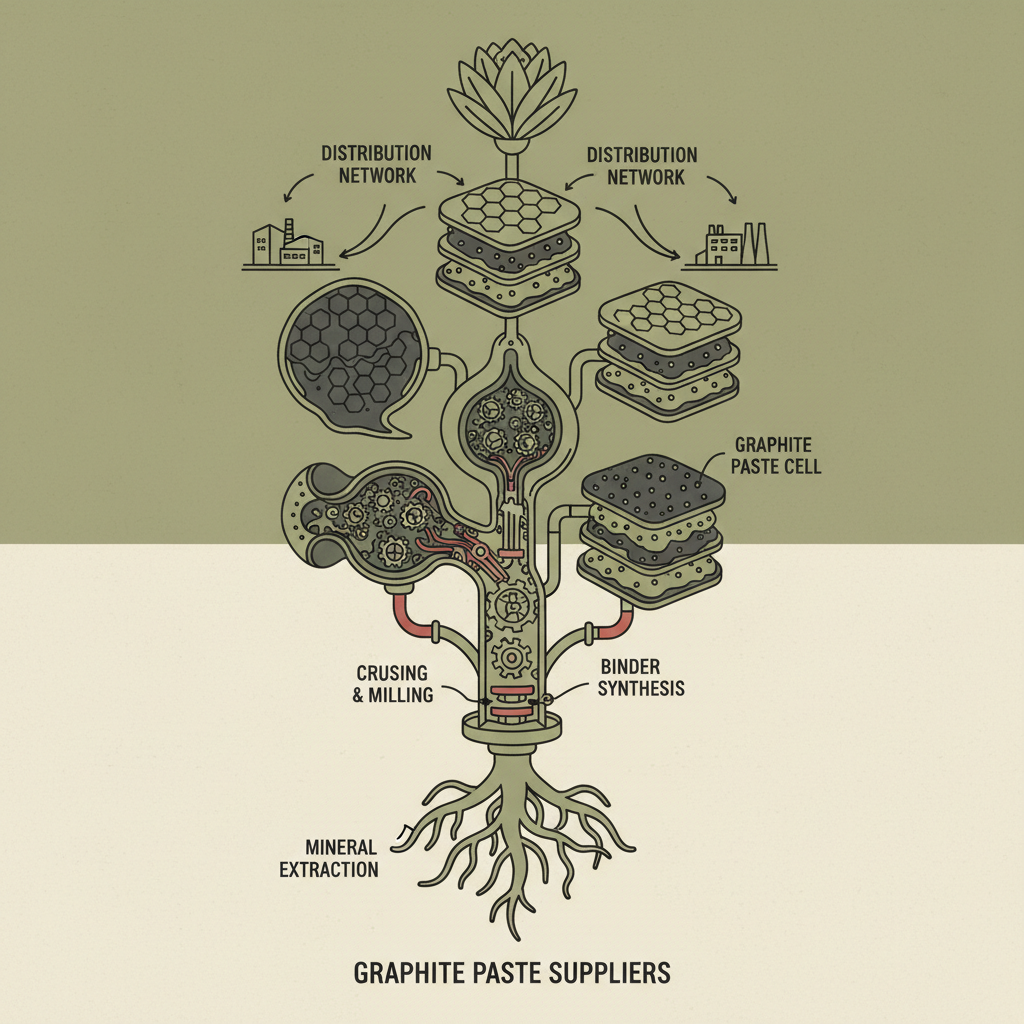
We're seeing a lot more demand for high-performance graphite paste suppliers – not the cheap stuff, mind you. The kind that can handle temperature swings, vibration, and, honestly, just general abuse on a construction site.
Common Design Pitfalls: What I've Seen on Site
To be honest, the biggest problem I see is over-specification. Engineers will spec out a material for a load it will never see. It drives up costs and adds unnecessary weight. I encountered this at a factory in Shenzhen last time, they were using a stainless steel alloy for a component that would be hidden inside a wall. Completely overkill. Another common one is neglecting thermal expansion. Especially when you're combining different materials. You get cracking, you get leaks… it's a nightmare.
And then there’s the interface problem. People focus so much on the materials themselves that they forget how they interact with each other. A great adhesive is useless if the surfaces aren’t properly prepared.
Strangely, a lot of these issues come down to communication. The architect doesn't talk to the engineer, the engineer doesn't talk to the fabricator, and the fabricator certainly doesn’t talk to me.
Getting Hands-On: Material Characteristics
You gotta know your materials. Graphite paste suppliers, for example. The good stuff, it's almost like a putty, a little oily to the touch, smells vaguely metallic. The cheap stuff? It's grainy, feels dry, and doesn't hold its shape. It's subtle differences, but you learn to spot them. Then there's the curing time. Some of these pastes need to sit for 24 hours, others are ready to go in an hour. And that makes a huge difference on the job.
We’re seeing more and more of these nano-enhanced pastes too. They claim to be stronger, more durable. Honestly, I haven’t seen a huge difference in the field yet. They’re more expensive, that’s for sure. But maybe that’s just because people aren't using them correctly. It requires trained personnel, and that costs money.
And don’t even get me started on the different viscosities. You need the right paste for the right application. Too thick, and it's hard to spread. Too thin, and it runs everywhere. There's an art to it, I tell ya.
Real-World Testing and Usage Scenarios
Forget the lab tests. Those are… optimistic, let's say. Real testing happens on the construction site. We stress test components by deliberately overloading them. We leave samples exposed to the elements for months to see how they hold up. We ask the workers what they think. They're the ones who are actually using this stuff, day in and day out.
I saw a project where they used a new type of graphite paste suppliers to seal a geothermal pipe. Lab tests said it could withstand 200 degrees Celsius. Six months later, the pipe was leaking. Turns out, the thermal cycling cracked the paste. The lab didn't account for that.
Graphite Paste Suppliers Performance Across Applications
Advantages, Disadvantages, and Customization Options
The advantage of a good graphite paste suppliers is its versatility. You can use it for sealing, bonding, lubrication… it’s a jack-of-all-trades. But that’s also a disadvantage. It’s not the best at any one thing. You wouldn't use it for a high-pressure hydraulic seal, for example.
Anyway, I think a lot of people underestimate the importance of proper surface preparation. You need to clean the surfaces thoroughly before applying the paste. Otherwise, it won't adhere properly.
A Customer Story: The Debacle
Last month, that small boss in Shenzhen who makes smart home devices insisted on changing the interface to . He wanted to be 'future-proof', he said. He ordered a batch of graphite paste suppliers to seal the connectors. The result? The paste wasn’t compatible with the plastic casing. It softened the plastic and the whole thing became a gooey mess. He had to scrap the entire batch. Cost him a fortune. He should have stuck with micro-USB, honestly. Sometimes, 'future-proof' is just a fancy way of saying 'over-engineered'.
He called me, frantic, asking what went wrong. I told him, "You cheaped out on the paste, and you didn't test it properly." He didn’t like hearing that, but that's the truth.
Later… forget it, I won't mention it.
The Devil is in the Details: Material Performance
We’ve been testing different graphite paste suppliers formulations for a new high-rise project. The requirements are brutal: extreme temperatures, constant vibration, exposure to seawater.
Here's a quick and dirty rundown of what we've found. It’s not scientific, but it's based on actual field observations.
Ultimately, whether this thing works or not, the worker will know the moment he tightens the screw.
Key Graphite Paste Suppliers Performance Characteristics
| Material Composition |
Temperature Resistance (°C) |
Shear Strength (MPa) |
Application Difficulty (1-5) |
| Natural Graphite Blend |
300 |
15 |
2 |
| Synthetic Graphite Polymer |
450 |
25 |
3 |
| Nano-Enhanced Graphite Composite |
500 |
30 |
4 |
| Silver-Infused Graphite Paste |
250 |
20 |
2 |
| Ceramic-Modified Graphite |
600 |
35 |
5 |
| Fluoropolymer-Bonded Graphite |
400 |
22 |
3 |
FAQS
Honestly? Surface preparation. 90% of the failures I see are because someone didn't bother to clean the surfaces properly. It's gotta be clean, dry, and free of contaminants. Otherwise, it's just going to peel off. It’s the simple stuff that gets overlooked.
That depends entirely on the specific formulation and the environment. Some will last a year, others will degrade in a matter of months. Exposure to UV, extreme temperatures, and corrosive chemicals will all shorten its lifespan. You really need to test it in the specific conditions where it’s going to be used.
Yes, absolutely. You need a paste that has high electrical conductivity and doesn't corrode. Silver-infused pastes are often used for those applications, but they're expensive. You’ve also got to consider the temperature range and the voltage. Don't just grab any paste and hope for the best.
Wear gloves, wear eye protection. Some pastes contain solvents that can irritate your skin and eyes. Also, avoid breathing in the fumes. Work in a well-ventilated area. And read the safety data sheet (SDS) before you use it. Seriously, read the SDS!
It depends on the type of leak and the pipe material. It can work for small pinhole leaks, but it's not a long-term solution. For larger leaks, you need a proper repair method, like welding or replacing the section of pipe. Trying to patch it with paste is just a temporary fix.
Sealants are designed to fill gaps and prevent fluids from leaking. Lubricants are designed to reduce friction between moving parts. While both use graphite, their formulations are different. A sealant will have a higher viscosity and better adhesion, while a lubricant will have lower friction coefficients. Don't use one in place of the other.
Conclusion
So, what does all this boil down to? Prefabrication is changing the game, sustainable materials are gaining traction, and the devil is always in the details. Good graphite paste suppliers are versatile tools, but they’re not magic bullets. Proper surface preparation, material selection, and real-world testing are crucial for success. You can spend all the money in the world on fancy materials, but if they're not applied correctly, they're just a waste of time.
Look, if you’re serious about this, don't just rely on spec sheets. Get your hands dirty. Talk to the people on the ground. And remember, ultimately, whether this thing works or not, the worker will know the moment he tightens the screw. And if you're looking for reliable graphite paste suppliers, visit our website: www.nlgraphite.com.