

- Englist



Comprehensive Petroleum Coke Price Chart Analysis and Market Trends

Petroleum Coke Price Chart: A Comprehensive Guide
Understanding the petroleum coke (petcoke) price chart is crucial for businesses involved in aluminum production, steel manufacturing, and other industries relying on this carbon material. This article will explore the factors influencing petcoke prices, recent trends, and resources for tracking market data. We'll provide insights to help you make informed purchasing decisions and manage your costs effectively. Staying informed about petcoke pricing dynamics is essential for maintaining profitability in competitive markets. NL Graphite can provide high-quality petcoke to meet your specific requirements.
What Influences Petroleum Coke Prices?
Several key factors impact the petroleum coke price chart. Crude oil prices are a primary driver, as petcoke is a byproduct of oil refining. Demand from the aluminum and steel industries directly affects prices; increased production in these sectors leads to higher demand and potentially higher prices. Supply chain disruptions, transportation costs (particularly shipping rates), and geopolitical events also play significant roles. Environmental regulations relating to sulfur content in petcoke can also influence pricing, as compliance costs may be passed on to buyers. Furthermore, the quality and specifications of the petcoke, such as sulfur content and fixed carbon, significantly affect its market value.
Key Influencing Factors: Crude oil prices, aluminum & steel demand, supply chain issues, transportation costs, environmental regulations, and petcoke quality.
Recent Trends in the Petroleum Coke Price Chart
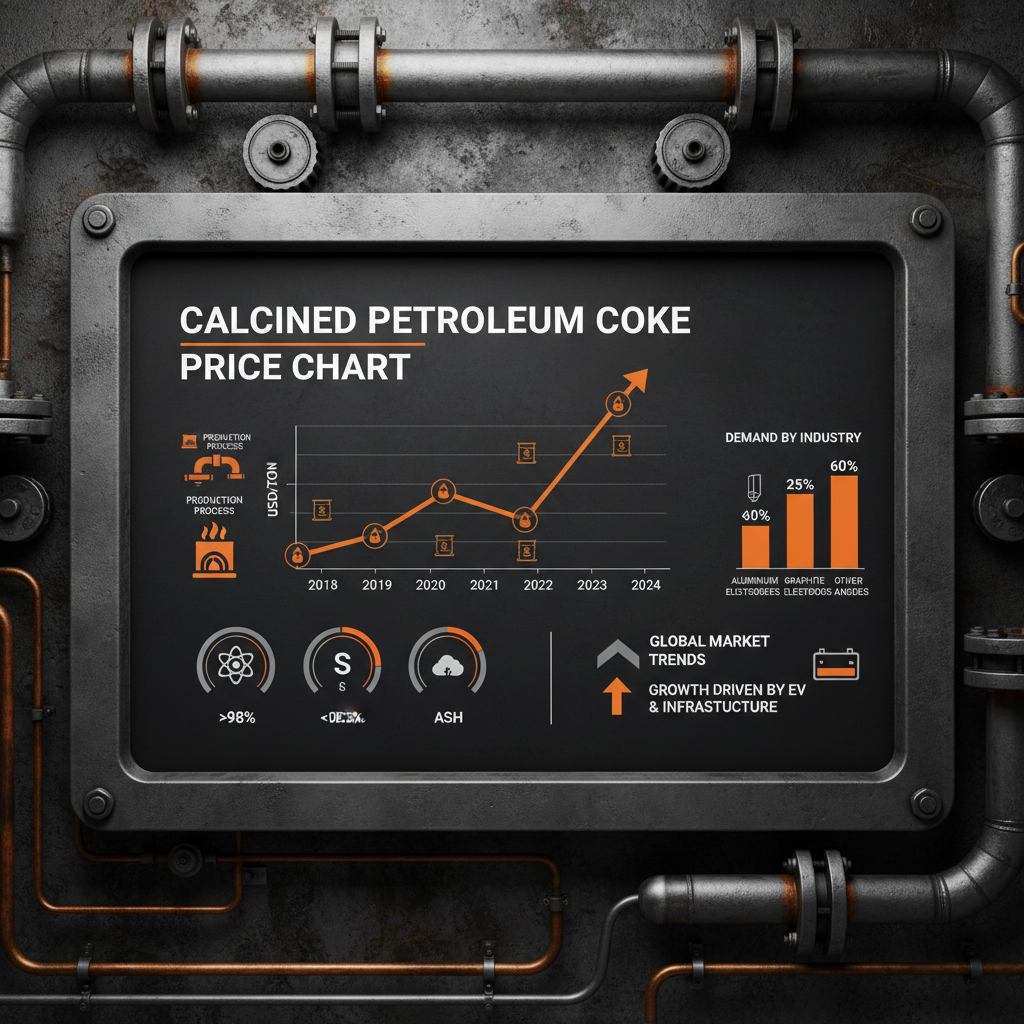
Over the past few years, the petroleum coke price chart has exhibited notable volatility. Prices surged in 2022 due to supply chain bottlenecks and increased energy demand following the pandemic. However, as global economic conditions shifted, prices experienced a correction in late 2023 and early 2024. The current trend indicates a stabilization with moderate fluctuations, influenced by ongoing geopolitical instability and fluctuating crude oil prices. Demand from India and China remains a significant factor. NL Graphite actively monitors these trends to offer competitive pricing to our customers.
Market Trend Highlights:
• Surge in 2022 due to supply chain issues.
• Price correction in late 2023/early 2024.
• Current stabilization with moderate fluctuations.
• Strong demand from India and China.
Petroleum Coke Price Chart: Regional Variations
Petroleum coke prices can vary significantly depending on the region. The US Gulf Coast typically sees lower prices due to proximity to refineries and abundant supply. Prices in Europe tend to be higher due to transportation costs and stricter environmental regulations. Asia, particularly China and India, experiences fluctuating prices driven by domestic demand and import policies. These regional differences are critical for businesses to consider when sourcing petcoke.
Where to Find Reliable Petroleum Coke Price Information
Tracking the petroleum coke price chart requires utilizing reputable sources. Industry publications like Argus Media and Platts provide detailed price assessments and market analysis. Online commodity trading platforms also offer real-time price data. Directly engaging with petcoke suppliers, such as NL Graphite, can provide valuable insights into current market conditions. Consistent monitoring of these resources is vital for proactive price management.
NL Graphite: Your Trusted Petcoke Supplier
NL Graphite is a leading provider of high-quality petroleum coke. We offer consistent quality, competitive pricing, and reliable supply chain solutions. Our team of experts can assist you in navigating the complexities of the petcoke market and securing the best possible value for your business. We specialize in delivering tailored solutions to meet your specific industrial needs.
Conclusion
Understanding the factors influencing the petroleum coke price chart is critical for businesses across various industries. By staying informed about market trends, regional variations, and reliable sourcing options like NL Graphite, you can effectively manage costs and optimize your procurement strategies.
Frequently Asked Questions (FAQs)
What is the typical sulfur content in petroleum coke?
Sulfur content in petroleum coke varies significantly depending on the refining process and the crude oil source. It can range from less than 1% to over 8%. Lower sulfur content typically commands a higher price, as it requires less processing for certain applications, particularly in aluminum production. NL Graphite offers petcoke with varying sulfur levels to meet specific customer needs and provides detailed specifications for each product.
How is petcoke typically transported?
Petroleum coke is commonly transported by sea, rail, and truck. Shipping is the most economical method for large volumes and long distances. Rail transport is often used for inland distribution. Trucking is suitable for shorter hauls and smaller quantities. Transportation costs significantly impact the final price of petcoke, especially for buyers located far from refineries.
What are the primary uses of petroleum coke?
The primary uses of petroleum coke are in the aluminum production industry, where it serves as the carbon source in the smelting process. It's also used in steel manufacturing, cement production, and as a fuel source in power plants. Additionally, it finds applications in the production of titanium dioxide and other chemicals.
What should I consider when choosing a petcoke supplier?
When selecting a petcoke supplier, consider factors such as product quality, consistency of supply, pricing, logistical capabilities, and technical support. It’s crucial to ensure the supplier can meet your specific requirements regarding sulfur content, particle size, and other critical specifications. NL Graphite prioritizes customer satisfaction and offers tailored solutions to meet diverse industrial needs.
 Pervious
 Next
Next