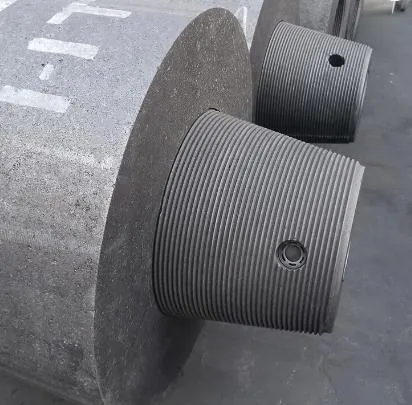


- Englist


Artificial Graphite Powder Price for Lithium Ion Battery Anode Materials: Choosing by Grade, Form and Application Requirements

THE BUYER'S GUIDE / SELECTION
Artificial Graphite Powder Price for Lithium Ion Battery Anode Materials: Choosing by Grade, Form and Application Requirements
Selecting the right artificial graphite powder for lithium ion battery anode materials involves more than comparing prices — it requires matching grade, particle size, carbon content, and composition to your specific process and end-use requirements. This guide, grounded in confirmed product data from Shijiazhuang nalai biotechnology Co., Ltd, walks procurement teams through the core selection criteria: industrial grade classification, customizable grain size ranges, composition (graphite, needle coke, petroleum coke), and multi-industry applicability. Whether you are sourcing for battery electrode production, refractory applications, or electronic components, understanding these factors helps you evaluate the artificial graphite powder price for lithium ion battery anode materials in the correct technical context — and ask suppliers the right questions before placing an order.

Grade and carbon content: Industrial-grade classification with high fixed carbon and low sulfur, sourced from a graphite, needle coke, and petroleum coke composition. Buyers should request a certificate of analysis specifying the actual fixed carbon percentage and sulfur level for the supplied batch, as these directly affect anode electrochemical performance.
Particle size (grain size): Available in multiple ranges including 0–0.075 mm, 0.5–1 mm, 1–5 mm, 1–6 mm, 6–13 mm, and 32–300 mesh, with customization available. For lithium ion battery anode slurry applications, fine fractions (0–0.075 mm and fine mesh grades) are the most relevant; coarser fractions suit refractory and mold uses. Confirm the particle size distribution with sieve analysis data and verify whether the supplied form is loose powder or a block requiring milling.
Why Artificial Graphite Powder Price Alone Is Not the Whole Story
When procurement teams search for artificial graphite powder price for lithium ion battery anode materials, the instinct is often to compare unit costs first. In practice, the total cost of a graphite powder purchase is shaped by grade specification, particle size distribution, carbon content, order volume, and whether the supplier can customize to your process window. Buying the cheapest available grade for a battery anode application and discovering it mismatches your cell chemistry is far more expensive than paying a modest premium for a correctly specified material from the outset.
Shijiazhuang nalai biotechnology Co., Ltd manufactures industrial-grade graphite powder with customizable grain sizes and high carbon content, designed to serve battery, metallurgical, electronic, and refractory applications. The sections below explain what each selection criterion means in practice.
Core Selection Criteria
1. Grade: Industrial Grade for Anode Applications
The confirmed product data lists Industrial Grade as the classification for the graphite powder in this line. Industrial-grade artificial graphite powder is processed from raw carbonaceous feedstocks — in this case a composition of graphite, needle coke, and petroleum coke — through high-temperature graphitization. For lithium ion battery anode use, the grade determines structural order, which affects the material's ability to intercalate and release lithium ions repeatedly without significant capacity fade.
Buyers should confirm with the supplier which grade tier aligns with their cell specification, because the same "industrial grade" label can cover a wide performance band depending on graphitization temperature and feedstock quality. Request a sample and test it against your internal cell performance benchmarks before committing to volume.
2. Particle Size (Grain Size): Customizable to Your Process
Grain size is one of the most critical variables for battery anode performance and is also a key driver of price differentiation. The confirmed product data lists the following available size ranges:
- 0–0.075 mm (sub-75 µm, fine powder)
- 0.5–1 mm
- 1–5 mm
- 1–6 mm
- 6–13 mm
- 32–300 mesh (equivalent sieve-based specification)
For lithium ion battery anode slurry preparation, buyers typically require fine particle distributions in the sub-100 µm range, where the 0–0.075 mm specification and fine mesh grades are most relevant. Coarser fractions (1–6 mm, 6–13 mm) are better suited for refractory blocks, furnace linings, and mold applications.
Grain size customization is available according to the confirmed product specification. If your process requires a tighter distribution than the standard ranges, discuss tolerance windows and sieve analysis certificates with the supplier before finalizing your purchase order.
3. Carbon Content: High-Carbon Classification
The confirmed product data specifies High-Carbon content for these graphite powder grades. In anode material procurement, higher fixed carbon generally correlates with lower impurity levels (particularly lower sulfur, as explicitly noted in the product description), which is favourable for battery cell chemistry because metallic and ionic impurities can compromise electrolyte stability and cycle life.
The product description confirms the following quality highlights:
- Higher fixed carbon
- Lower sulfur
Buyers should request the specific carbon content percentage and sulfur content figure in the supplier's technical data sheet or inspection certificate for the relevant batch, since "high-carbon" is a category descriptor, not a single numerical value.
4. Composition: Graphite, Needle Coke, Petroleum Coke
The confirmed composition — graphite, needle coke, and petroleum coke — is relevant to understanding the material's electrochemical character. Needle coke is a premium precursor that imparts a more ordered graphitic microstructure and is commonly associated with synthetic graphite used in high-performance anodes and electrode applications. Petroleum coke contributes to the carbon matrix and influences both density and reactivity.
This composition is consistent with a material suitable for battery electrode anodes as well as the electrical industry applications listed in the confirmed product data (graphite electrodes, brushes, battery electrodes).
5. Expansion Ratio and Form Factor
The confirmed product data records an expansion ratio of >350 ml/g. This parameter describes volumetric behaviour relevant primarily to expanded graphite applications (sealing, thermal management, gasket materials) rather than to conventional battery anode slurry use. Buyers targeting anode slurry applications should clarify with the supplier whether this expansion ratio relates to a specific intercalation pre-treatment step or is a property of the as-received powder, and whether it is relevant to their downstream process.
The product is classified under Molded Graphite forming method and Graphite Block type in the product data. Buyers should confirm the supplied form — loose powder, pressed block for subsequent milling, or ready-to-use powder — and align it with their downstream milling, mixing, or coating steps.
6. Application Fit: Is This Material Right for Your End Use?
The confirmed product data documents the following application categories:
| Application Area | Relevant Use Case |
|---|---|
| Battery industry | Electrode of battery industry (anode material) |
| Metallurgical industry | Refractory material, coating, hot-working stabilizer |
| Electronics industry | Graphite electrode, carbon brush |
| Sealing and mechanical | Sealing rings, centrifugal pump and turbine components |
| Chemical/anticorrosion | Petroleum, chemical, hydrometallurgy departments |
| Furnace components | Heating elements, induction susceptors, furnace linings |
| Molds | Hot pressing, static casting, centrifugal casting, pressure casting molds |
For lithium ion battery anode material procurement, the battery industry electrode application is directly confirmed. Buyers in other industries can cross-reference their own use case against the table above to determine suitability.
Packaging, Logistics and Ordering Considerations
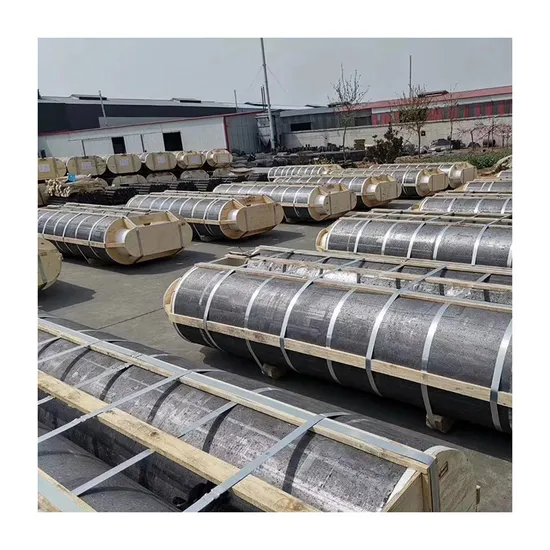
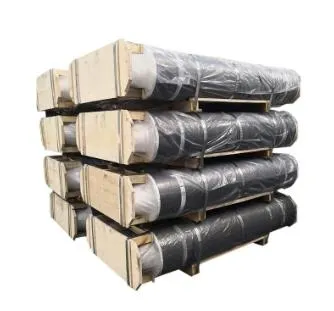
The confirmed product data specifies wooden pallets with steel strips as standard transport packaging, which is appropriate for bulk powder shipments in international trade. The HS code listed is 38011000 (for the powder product), which is relevant for import duty and customs classification in target markets including the US, Europe, Middle East, and Southeast Asia.
Key commercial process points confirmed by the product FAQ:
- Free samples are available; buyer arranges shipping cost or courier.
- Delivery: shipped within 3–20 days after payment (exact lead time depends on order specifics).
- Volume discounts: different quantity tiers carry different discount levels — request a formal quotation for your volume.
- OEM/ODM: available; the supplier will produce to buyer specifications.
- Quality complaints: each batch is tested before shipping; an after-sales service team handles post-delivery issues.
Production capacity is confirmed at 900 tons/year, which is a relevant consideration for buyers needing assured annual volume.
Questions to Ask Before Confirming Your Order
Before committing to a purchase of artificial graphite powder for lithium ion battery anode materials, use the following checklist to align your specification with what the supplier can deliver:
- What is the fixed carbon percentage and sulfur content for the batch you will supply? (Request inspection certificate or COA.)
- What is the exact particle size distribution for my target mesh/micron range? (Request sieve analysis or laser diffraction data.)
- Is the graphitization temperature documented? (Relevant to crystalline order and d-spacing for anode performance.)
- What is the supplied form — loose powder or block requiring further milling?
- Does the expansion ratio specification apply to the powder as shipped, or only after intercalation treatment?
- What is the minimum order quantity for the customized grain size I require?
- Can you provide a sample in my target particle size range before I place a volume order?
Shijiazhuang nalai biotechnology Co., Ltd confirms that free samples can be arranged and that technical personnel recommend matching materials based on customer-supplied working conditions — which means providing detailed process requirements upfront will improve the accuracy of the material match.
Selection Summary
The artificial graphite powder price for lithium ion battery anode materials from Shijiazhuang nalai biotechnology Co., Ltd is best evaluated against the full specification context:
- Grade: Industrial grade, high-carbon, low-sulfur
- Particle size: Customizable across a wide range; fine fractions (0–0.075 mm, fine mesh) are most relevant for anode slurry
- Composition: Graphite, needle coke, petroleum coke — consistent with synthetic graphite for battery electrode applications
- Volume flexibility: OEM/ODM available, volume discounts, 900 t/year production capacity
- Sample policy: Free samples available before volume commitment
This product is applicable to battery electrode anodes, refractory, electrical, sealing, anticorrosion, and mold applications. Buyers whose process requires specific electrochemical performance parameters beyond carbon content and particle size should request full technical data sheets and, where necessary, conduct in-house cell-level testing before scaling to production volumes.
THE PEOPLE

About the author
THE COMPANY
Shijiazhuang nalai biotechnology Co., Ltd
Shijiazhuang nalai biotechnology Co., Ltd is a professional manufacturer in integrating design, development, trial and production. Our main products are graphite electrode, graphite rod, graphite block, graphite crucible., with 30 technicians and 360 skilled workers, and has a strict quality control system. Custom styles are available.Competitive price and high quality products, when we get your inquiry, we will come back to you at the first time.…
About Us ↗Visit company website ↗YOUR NEXT STEP
Bring your brief. Start a useful conversation.
Use case, specification, quantity and delivery window: make the next conversation specific.
 Pervious
 Next