

- Englist


Choosing a High Density Metal Melting Caly Graphite Crucible for Vacuum Evaporation Coating: Grade, Form and Application Requirements

THE BUYER'S GUIDE / SELECTION
Choosing a High Density Metal Melting Caly Graphite Crucible for Vacuum Evaporation Coating: Grade, Form and Application Requirements
Vacuum evaporation coating imposes demanding requirements on source material containers: very low outgassing, adequate density, high chemical purity and sufficient mechanical strength to survive repeated thermal cycles inside the vacuum chamber. This guide explains how to evaluate a High Density Metal Melting Caly Graphite Crucible for Vacuum Evaporation Coating against those requirements, covering grade selection by density, strength class, porosity limits, manufacturing method and the range of metals the crucible is expected to hold. Confirmed products from Shijiazhuang nalai biotechnology Co., Ltd are used throughout to illustrate how the specification table maps to real procurement choices.

Density grade and mechanical strength: select from Grades 1 to 8 (density min. 1.70 to min. 1.90 g/cm3) based on charge metal weight and structural duty; Grade 8 provides the highest confirmed compressive strength (84 MPa) and breaking strength (44 MPa) in the range; product-level flexural strength is 38-60 MPa and compressive strength 65-135 MPa.
Chemical purity, porosity and vacuum compatibility: all listed grades carry ash content max. 0.01% and maximum porosity 15%; these thresholds directly limit film contamination and vacuum pump-down time; compression moulding and furnace firing control open-pore distribution.
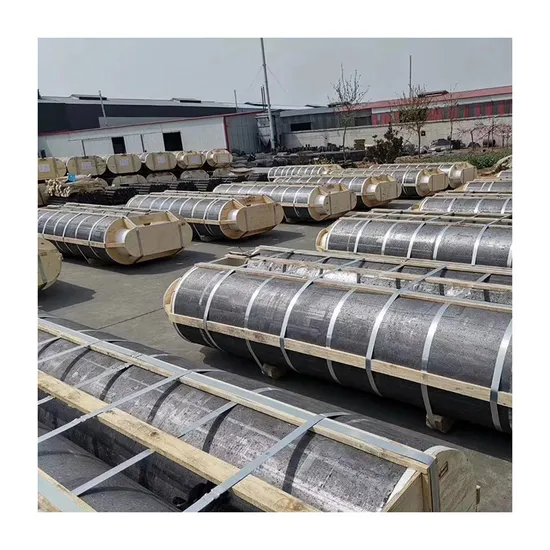
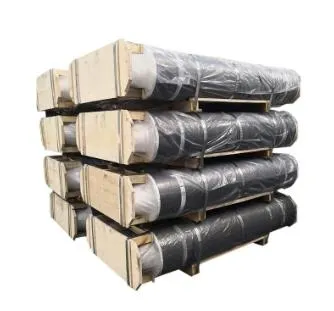
Manufacturing form, geometry and customisation: dimensions are fully customisable to match vacuum coating system pocket geometry; compression-moulded and furnace-fired construction; transport in plywood wooden cases; buyers should supply exact geometry when requesting a quotation.
Target metal and application scope: confirmed for non-ferrous metals (copper, brass, gold, silver, zinc, lead) and their alloys; noble-metal evaporation (gold, silver, platinum) benefits from the max. 0.01% ash purity specification; protective-atmosphere operation confirmed above 2000 degrees C; oxidation above 700 to 800 degrees C in oxygen means process atmosphere must be verified.
Thermal performance: uniform heating structure and good thermal conductivity confirmed; relevant to preventing localised hot spots and substrate spattering in vacuum evaporation cycles.
Grade anomaly awareness: Grade 6 shows a lower density floor (1.58 g/cm3) than Grade 5 (1.82 g/cm3) while offering higher strength values; buyers selecting Grade 6 should seek manufacturer clarification before finalising specification.
Why Vacuum Evaporation Coating Demands a Carefully Chosen Graphite Crucible
In vacuum evaporation coating, a metal charge is placed in a crucible, the chamber is evacuated, and heat is applied until the metal evaporates and deposits as a thin film on the substrate. Any contaminant that outgasses from the crucible at process temperature will be co-deposited on the substrate, degrading film purity. The crucible must therefore combine:
- High chemical purity: low ash content limits contamination of the evaporated film.
- Low porosity: a dense structure minimises trapped gases that would otherwise outgas under vacuum.
- Adequate mechanical strength: compressive and flexural strength sufficient to handle the charge weight and repeated heating cycles without cracking.
- Good thermal conductivity: uniform heat transfer to the charge shortens melt time and reduces hot-spot damage to the crucible wall.
- Corrosion resistance: resistance to attack by molten metals at elevated temperature extends service life.
The High Density Metal Melting Caly Graphite Crucible for Vacuum Evaporation Coating addresses all five of these demands through its compression-moulding process and controlled raw-material formulation.
How the Manufacturing Process Affects Performance
According to confirmed product documentation, the crucible is manufactured by:
- Blending artificial graphite powder with additional materials in an insulated double-axis stirring drum.
- Measuring the blended paste in a paste barrel to control charge weight per crucible.
- Transporting the paste into a mould via a conveying device and pressing it under a press (compression moulding).
- Demoulding, then drying the green body.
- Firing in a furnace to complete densification.
Compression moulding produces a consistent wall thickness and a controlled density profile. The firing step drives out volatile matter and develops the interlocking graphite crystallite structure that gives the finished part its thermal conductivity and corrosion resistance. Buyers specifying this crucible for vacuum coating should confirm the grade number against their target density range, as the eight-grade specification table shows a progressive density increase from Grade 1 (min. 1.70 g/cm3) through Grade 8 (min. 1.90 g/cm3).
Understanding the Eight-Grade Specification
Shijiazhuang nalai biotechnology Co., Ltd publishes a specification covering eight grades. Each grade is defined by the following parameters (all values from confirmed product documentation):
- All grades: porosity max. 15%, resistivity max. 10 uOhm/m, ash content max. 0.01%, particle size 32 um.
- Grade 1: density min. 1.70 g/cm3, compressive strength min. 40 MPa, breaking strength min. 20 MPa.
- Grade 2: density min. 1.75 g/cm3, compressive strength min. 55 MPa, breaking strength min. 27 MPa.
- Grade 3: density min. 1.77 g/cm3, compressive strength min. 58 MPa, breaking strength min. 28 MPa.
- Grade 4: density min. 1.80 g/cm3, compressive strength min. 65 MPa, breaking strength min. 30 MPa.
- Grade 5: density min. 1.82 g/cm3, compressive strength min. 68 MPa, breaking strength min. 33 MPa.
- Grade 6: density min. 1.58 g/cm3, compressive strength min. 78 MPa, breaking strength min. 40 MPa.
- Grade 7: density min. 1.88 g/cm3, compressive strength min. 83 MPa, breaking strength min. 42 MPa.
- Grade 8: density min. 1.90 g/cm3, compressive strength min. 84 MPa, breaking strength min. 44 MPa.
Note on Grade 6: Grade 6 shows a density floor of 1.58 g/cm3, lower than Grade 5, while its compressive and breaking strength values are higher than Grade 5. This pattern may reflect a different structural balance for certain geometries. Buyers considering Grade 6 alongside Grade 5 should request clarification from the manufacturer.
The uniform ash ceiling of max. 0.01% across all grades is directly relevant for vacuum coating: it indicates very high carbon purity, reducing the risk of metallic or oxide contamination in the evaporated film.
Key Selection Criteria for Vacuum Evaporation Coating Applications
Density Grade vs. Charge Metal
Higher-density grades (Grades 7 and 8, min. 1.88-1.90 g/cm3) offer the highest compressive and breaking strength in the confirmed range. For heavy charge metals or large crucible volumes, these grades reduce the risk of structural failure during heating. For lighter charge metals or smaller batch sizes, mid-range grades (Grades 3 to 5) may offer a workable balance between density and mechanical integrity.
The confirmed product documentation states that the crucible is intended for metal melting and casting, and is suitable for non-ferrous metals including copper, brass, gold, silver, zinc and lead, as well as their alloys. Buyers coating optical or electronic substrates with noble metals should note that the high-purity graphite specification (ash max. 0.01%) is a key criterion for preventing film contamination.
Mechanical Strength Class
The product-level flexural strength range is stated as 38-60 MPa and compressive strength as 65-135 MPa. Within the eight-grade table, Grade 8 achieves the highest confirmed breaking strength (44 MPa) and compressive strength (84 MPa). Buyers should match the grade to the maximum load expected during the evaporation cycle.
Porosity and Vacuum Compatibility
All eight grades share a maximum porosity of 15%. For vacuum evaporation, lower effective porosity is preferred because open pores trap gas that desorbs when the chamber is pumped down, increasing pump-down time and potentially contaminating the substrate. The compression-moulding process combined with furnace firing limits open porosity and promotes a more uniform pore distribution. Buyers requiring tighter porosity control should discuss grade selection and customisation directly with Shijiazhuang nalai biotechnology Co., Ltd.
Chemical Purity and Ash Content
All listed grades carry an ash content ceiling of max. 0.01%. This is the primary purity indicator for vacuum coating applications. Lower ash content means fewer non-carbon impurities that could volatilise and co-deposit on the substrate. This specification is consistent across grades, so purity alone does not differentiate one grade from another; the differentiating criteria are density, strength and, for specific geometries, dimensional customisation.
Manufacturing Form and Customisation
The specification confirms that dimensions are customised and the transport package is wooden cases (plywood). Vacuum coating systems vary in crucible pocket geometry, including boat-style, cylinder, cone and tapered cup forms. The compression-moulding process supports a range of forms, and the product documentation explicitly confirms custom machining is available. Buyers should supply their exact pocket dimensions and crucible geometry when requesting a quotation.
Thermal Properties
The confirmed product features include uniformity of heating structure, good electrical conductivity and high electrical load, and high mechanical strength. In evaporation coating, the thermal conductivity of the crucible body directly affects how evenly the charge melts. Poor conductivity leads to localised hot spots, which can crack the crucible or cause spattering that damages the substrate. The design emphasis on uniform heating structure is therefore directly relevant to vacuum coating applications.
Application Scope: Where This Crucible Fits
Confirmed documentation identifies the following application areas for graphite crucibles of this family:
- Non-ferrous metal melting and casting: copper, brass, gold, silver, zinc, lead and their alloys.
- Precious-metal melting for jewellery and headgear: requires high density, purity and ablation resistance; can be used repeatedly.
- Noble metal evaporation: gold, silver and platinum for thin-film deposition.
- Protective-atmosphere operation: capable of withstanding temperatures above 2000 degrees C in a protective atmosphere.
- Oxygen-atmosphere limitation: oxidation begins above approximately 700 to 800 degrees C in oxygen. Vacuum evaporation processes remove oxygen from the chamber, so this limitation is generally not a concern in correctly maintained vacuum coating systems. Buyers using the crucible in any process with residual oxygen should verify compatible operating temperatures with their equipment manufacturer.
Applicable Products from Shijiazhuang nalai biotechnology Co., Ltd
Four confirmed graphite crucible products share the same eight-grade specification table, making all four candidates for vacuum evaporation coating selection depending on the buyer's specific geometry, metal type and grade requirements:
- High Density Metal Melting Caly Graphite Crucible for Vacuum Evaporation Coating (Model NaLai-Graphite Crucible-005): the primary product for this guide; compression-moulded; customisable dimensions; all eight density grades available.
- 99.95% Graphite Crucible High Carbon Crucible for Vacuum Coating (Model NaLai-Graphite Crucible-035): explicitly designated for vacuum coating; specifies 99.95% carbon purity; shares the same eight-grade strength-density specification; compression-moulded with customisable specification.
- Custom Graphite Crucible for Induction Heating and Melting: made from moulded or isostatic graphite; density 1.78-1.85 g/cm3; confirmed for noble-metal melting and for use in a protective atmosphere above 2000 degrees C; fully customisable.
- Different Types Graphite Crucible Cup for Melting Metal: cylindrical form; density 1.78-1.85 g/cm3; corrosion resistance and thermal-shock resistance confirmed; suitable for a wide industrial range including semiconductor and electronics applications.
All four products are manufactured by Shijiazhuang nalai biotechnology Co., Ltd and shipped in plywood wooden cases.
Procurement Decision Checklist
Before placing an order for a High Density Metal Melting Caly Graphite Crucible for Vacuum Evaporation Coating, buyers should be able to answer the following questions:
- What metal or metals will be evaporated? Purity requirements vary by substrate application, such as optical coating, electrical contact or decorative film.
- What is the required density grade? Cross-reference the target density (1.70 to 1.90 g/cm3) against the eight-grade specification.
- What compressive and flexural strength is needed? Higher grades (7 and 8) provide the highest confirmed strength; lower grades reduce structural margin.
- What crucible geometry does your coating system require? Provide exact dimensions for custom fabrication.
- Will the process run under full vacuum or partial atmosphere? Confirm oxygen exposure levels with the equipment manufacturer.
- What batch size and cycle frequency are planned? Corrosion resistance and thermal-shock durability affect expected service life.
Summary
The High Density Metal Melting Caly Graphite Crucible for Vacuum Evaporation Coating is produced by compression moulding from high-purity artificial graphite, offering eight selectable density grades from 1.70 to 1.90 g/cm3, uniform ash content of max. 0.01%, consistent porosity control at max. 15%, and increasing mechanical strength with grade number. Its confirmed application scope covers non-ferrous and noble metal melting under vacuum or protective-atmosphere conditions. Buyers selecting this product should identify the required density grade, confirm crucible geometry for custom fabrication, and verify process conditions with their equipment supplier before finalising a specification.
THE PEOPLE

About the author
THE COMPANY
Shijiazhuang nalai biotechnology Co., Ltd
Shijiazhuang nalai biotechnology Co., Ltd is a professional manufacturer in integrating design, development, trial and production. Our main products are graphite electrode, graphite rod, graphite block, graphite crucible., with 30 technicians and 360 skilled workers, and has a strict quality control system. Custom styles are available.Competitive price and high quality products, when we get your inquiry, we will come back to you at the first time.…
About Us ↗Visit company website ↗YOUR NEXT STEP
Bring your brief. Start a useful conversation.
Use case, specification, quantity and delivery window: make the next conversation specific.
 Pervious
 Next