

- Englist


Exploring Graphite Powder Melting Point – Key Industry Insights

Understanding graphite powder melting point: What I’ve Learned Over the Years
Having spent a fair chunk of my career in industrial equipment and materials sourcing, I’ve come to appreciate the quirks and nuances of graphite powder, especially its melting behavior. Oddly enough, graphite doesn’t behave like most substances when heated, and that melting point thing? It’s one I still catch newcomers off guard with.
First off, people typically expect materials to melt and turn into a liquid at some exact temperature—like water at 100°C. But graphite, being an allotrope of carbon, plays by different rules. In fact, graphite doesn’t really “melt” under normal atmospheric pressure. Instead, it sublimes—meaning it transforms directly from solid to gas—at temperatures around 3,600°C (6,512°F). This is insanely high and frankly, a huge advantage when you’re designing high-temp resistant equipment.
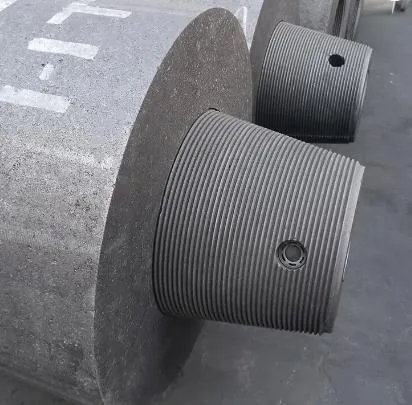
Now, this isn’t just academic fluff. Those of us in industrial manufacturing rely on graphite powder’s refractory properties for molds, crucibles, and coatings that need to withstand punishing heat. It’s why many engineers swear by it, especially in aerospace and metallurgy sectors. Honestly, working directly with suppliers like NL Graphite has made it easier to source consistently high-quality powder tailored for different industrial needs.
Here’s a simple spec summary for typical graphite powder you’ll encounter in the industry, just to give you some real-world context:
| Property | Typical Value | Unit |
|---|---|---|
| Purity | >99.5 | % |
| Particle Size | 5 - 20 | microns |
| Bulk Density | 0.4 - 0.7 | g/cm³ |
| Melting Point (Sublimation) | ~3600 | °C |
| Electrical Conductivity | ~10⁴ | S/m |
One of the challenges I’ve noticed when ordering graphite powder is variability between vendors — not everyone’s product is cut from the same cloth. Some have finer control over particle size distribution or purity, which can greatly impact how it’ll perform in your process.
To smooth that choice, here’s a quick comparison of a few well-known commercial suppliers I’ve worked with or heard from the field:
| Vendor | Purity (%) | Particle Size (microns) | Typical Application | Notes |
|---|---|---|---|---|
| NL Graphite | 99.9+ | 5-15 | Refractory, aerospace | Consistent quality, custom blends |
| Vendor B | 99.5 | 10-20 | Foundry, lubricants | Good volume pricing |
| Vendor C | 98.7 | 5-25 | Electrode manufacturing | Variable batch quality |
In one project I remember, we were testing refractory linings for a high-temperature furnace. The customer insisted on “premium grade” graphite powder, and initially, we sourced a cheaper alternative from a new supplier. Long story short, the lining degraded quicker than expected. Lesson learned: don’t skimp on quality when dealing with thermal extremes, especially since graphite’s impressive sublimation temperature only helps if the powder is pure and uniform.
In real terms, knowing the DISTINCT difference between melting and sublimation in graphite might feel like splitting hairs, but it’s critical for designing systems that rely on its thermal stability. I’ve come to recommend always linking technical specs with vendor transparency — ask for detailed purity tests, particle size analysis, and ideally, sample testing before large orders.
Lastly, if you’re curious or require specialized grades, vendors like NL Graphite often offer custom blends and powders that adapt to niche applications. It’s worth the dialogue when you’re pushing your equipment to the edge.
To wrap things up, graphite powder’s “melting point” is a bit of a misnomer but understanding its sublimation temperature and how purity and particle size affect performance will save you loads of headaches down the line. Trust me, after years of dealing with tricky material specs, staying curious and asking questions has been key.
Feel free to explore more about graphite powder and its applications on NL Graphite’s official site.
Key takeaway: Always remember, it’s not just about the temperature, but the purity and particle consistency that make graphite powder truly shine in extreme environments.
References
- Materials Science and Engineering: An Introduction, William D. Callister Jr.
- Industry discussions and case studies from industrial equipment forums.
- Supplier technical sheets and consultations, including NL Graphite.
 Pervious
 Next
Next