

- Englist



Graphite Plates for Fuel Cells | High Conductivity, Durable

Graphite Plates For Fuel Cells is a key solution in the new materials industry industry, specifically within Advanced carbon materials and High performance graphite and carbon products. This article explores how Shijiazhuang nalai biotechnology Co., Ltd supports professionals with durable, high-performance products, and explains why this product is an ideal choice for businesses in these sectors.
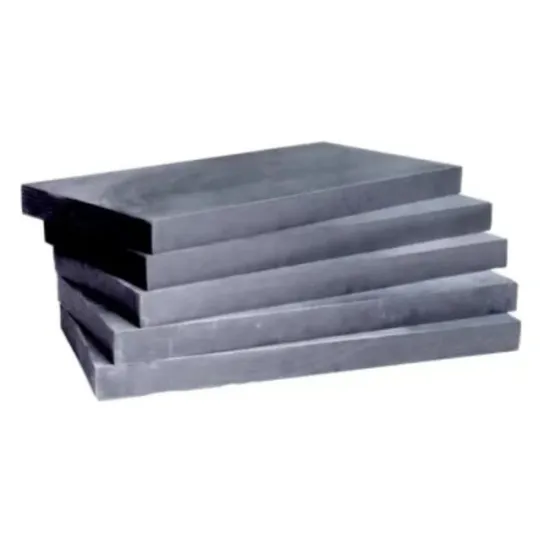
Table of Contents
- Graphite Plates For Fuel Cells Overview
- Benefits & Use Cases of Graphite Plates For Fuel Cells in High performance graphite and carbon products
- Cost, Maintenance & User Experience
- Sustainability & Market Trends in new materials industry
- Conclusion on Graphite Plates For Fuel Cells from Shijiazhuang nalai biotechnology Co., Ltd
Graphite Plates For Fuel Cells Overview
Graphite Plates For Fuel Cells serve as bipolar or end plates in PEMFC and DMFC stacks, channeling reactant gases, collecting current, and dissipating heat. As a core component in the advanced carbon materials category, they must deliver high electrical and thermal conductivity, low contact resistance, precise flow-field machining, and corrosion resistance in acidic, humid environments. Shijiazhuang nalai biotechnology Co., Ltd manufactures engineered graphite plates with controlled porosity and resin impregnation options to achieve gas impermeability and mechanical robustness. For applications requiring extreme purity or anisotropic heat spreading, a pyrolytic graphite plate can be specified. Flatness and surface finish are critical; our machining capability supports tight tolerances comparable to a graphite surface plate, enabling uniform stack compression and reliable sealing. Typical configurations include serpentine, interdigitated, or pin-type channels, with custom dimensions, chamfers, and porting. By combining material science, precision CNC, and rigorous QC, we provide OEMs and system integrators stable, repeatable plate performance across pilot runs and scaled production.
- Relevant to fuel cell stacks requiring high conductivity, chemical stability, and low permeability.
- Technical options: resin-impregnated graphite, surface treatments to reduce contact resistance, and custom flow-field geometries.
- Shijiazhuang nalai biotechnology Co., Ltd is a reliable manufacturer with proven machining, inspection, and lot traceability.
Benefits & Use Cases of Graphite Plates For Fuel Cells in High performance graphite and carbon products
In high-performance stacks, Graphite Plates For Fuel Cells enable efficient electron transfer and uniform heat management. OEMs deploy them in mobility PEMFCs, stationary backup power, and on-site hydrogen systems where long life and stable output are essential. The material’s inherent lubricity supports precise machining of microchannels without burrs, while chemical inertness resists phosphoric and sulfonic acid environments. Compared with metal plates, graphite avoids passivation issues, offers intrinsically low magnetic signature, and maintains conductivity without heavy coatings. Where extreme in-plane heat spreading is desired, a pyrolytic graphite plate insert can be integrated to flatten thermal gradients. For pilot lines and custom demonstrators, we provide small-batch, quick-turn flow-field iterations. For volume programs, our process controls safeguard dimension stability and surface finish, achieving consistent compression behavior comparable to a metrology-grade graphite surface plate. Shijiazhuang nalai biotechnology Co., Ltd partners with engineers to co-develop channel designs, seal lands, and manifolds, accelerating validation while preserving manufacturability.
- Applications: PEMFC stacks for vehicles, forklifts, telecom backup, distributed generation, and R&D stacks.
- Advantages: high conductivity, corrosion resistance, low contact resistance, dimensional stability, and excellent machinability.
- Expertise: CAD/CAM collaboration, prototype-to-production workflows, and strict QC at Shijiazhuang nalai biotechnology Co., Ltd.
Cost, Maintenance & User Experience
Total cost of ownership for Graphite Plates For Fuel Cells hinges on durability, stack efficiency, and maintainability. Graphite’s corrosion resistance reduces failure modes linked to coatings or galvanic effects, extending service life and lowering downtime. Precision-machined flow fields improve reactant distribution, which can enhance power density and contribute to lower cost per kilowatt at the system level. Our customers report smoother stack assembly thanks to consistent flatness and surface finish, fewer leaks due to stable seal lands, and predictable compression behavior across lots. Maintenance benefits include less degradation-related cleaning and fewer replacements over the stack’s operating life. Shijiazhuang nalai biotechnology Co., Ltd supports ROI with design-for-manufacture guidance, MOQ flexibility for pilots, and scalable pricing as programs ramp. Standard documentation includes COC, material certifications, surface-finish records, and dimensional inspection data—streamlining audits and accelerating acceptance for regulated markets.
- Lower TCO via corrosion resistance, stable conductivity, and reduced replacement cycles.
- Positive user feedback on assembly efficiency, leak reduction, and consistent electrical performance in advanced carbon materials applications.
Sustainability & Market Trends in new materials industry
As hydrogen ecosystems scale, the market demands materials that support high efficiency and long life while minimizing environmental impact. Graphite Plates For Fuel Cells align with this direction: they help maintain stack performance, reducing waste from premature replacements, and can be reclaimed or repurposed at end-of-life through established carbon-material pathways. Regulatory momentum for decarbonization, combined with incentives for zero-emission vehicles and clean backup power, is driving rapid growth. Standards bodies and industry consortia emphasize durability, safety, and traceable supply chains. Shijiazhuang nalai biotechnology Co., Ltd embraces these priorities with responsible sourcing, process optimization to cut machining waste, and continuous improvements in impregnation and surface treatments that extend plate longevity. We collaborate under NDAs, support PPAP-like documentation where required, and maintain lot traceability—helping customers meet internal ESG metrics and external compliance without compromising performance or cost targets.
- Sustainability: long-life components, reclaimable carbon materials, and process waste minimization.
- Forward-thinking supplier: Shijiazhuang nalai biotechnology Co., Ltd invests in quality systems, traceability, and eco-conscious manufacturing.
Conclusion on Graphite Plates For Fuel Cells from Shijiazhuang nalai biotechnology Co., Ltd
Graphite Plates For Fuel Cells are foundational to reliable, efficient PEMFC systems, combining conductivity, corrosion resistance, and precision flow-field machining. Within the new materials industry and the broader category of advanced carbon materials, they deliver the durability and performance B2B decision-makers require. Shijiazhuang nalai biotechnology Co., Ltd has earned a reputation for quality, customization, and dependable delivery—supporting projects from prototype to mass production. Ready to optimize your stack design and cost structure? Contact us: email: info@nalaibio.com — Visit our website: https://www.nlgraphite.com
- Value recap: performance, longevity, and manufacturability for high performance graphite and carbon products.
- Supplier confidence: proven processes and responsive engineering support.
- Strong CTA: - "Contact us: email: info@nalaibio.com - "Visit our website: https://www.nlgraphite.com"
 Pervious
 Next
Next