

- Englist



Comprehensive Guide to Calcined Petroleum Coke Uses and Industrial Applications

Calcined Petroleum Coke Uses: A Comprehensive Guide
Calcined Petroleum Coke (CPC) is a crucial carbon material derived from the delayed coking process in oil refineries. Its high carbon content, low sulfur, and consistent quality make it indispensable across numerous industries. Understanding its various uses is key to appreciating its economic importance. This article explores the properties of CPC and delves into its primary applications, offering a detailed overview for professionals and those interested in the materials science field.

Understanding the Properties of Calcined Petroleum Coke
CPC boasts several properties vital to its diverse applications. Primarily, it's characterized by a very high fixed carbon content—typically above 98.5%—which ensures efficient performance in processes requiring a pure carbon source. The sulfur content is critically low, often below 0.05%, crucial for minimizing environmental impact and avoiding issues in downstream processes. Furthermore, CPC exhibits excellent electrical conductivity, high density, and a consistent particle size distribution. These characteristics are carefully controlled during the calcining process, a heat treatment that removes volatile compounds and enhances the coke's stability. NL Graphite provides high-quality CPC tailored to specific industrial needs.
Key Properties: High fixed carbon content, low sulfur content, excellent electrical conductivity, and high density.
Calcined Petroleum Coke Uses in Aluminum Production
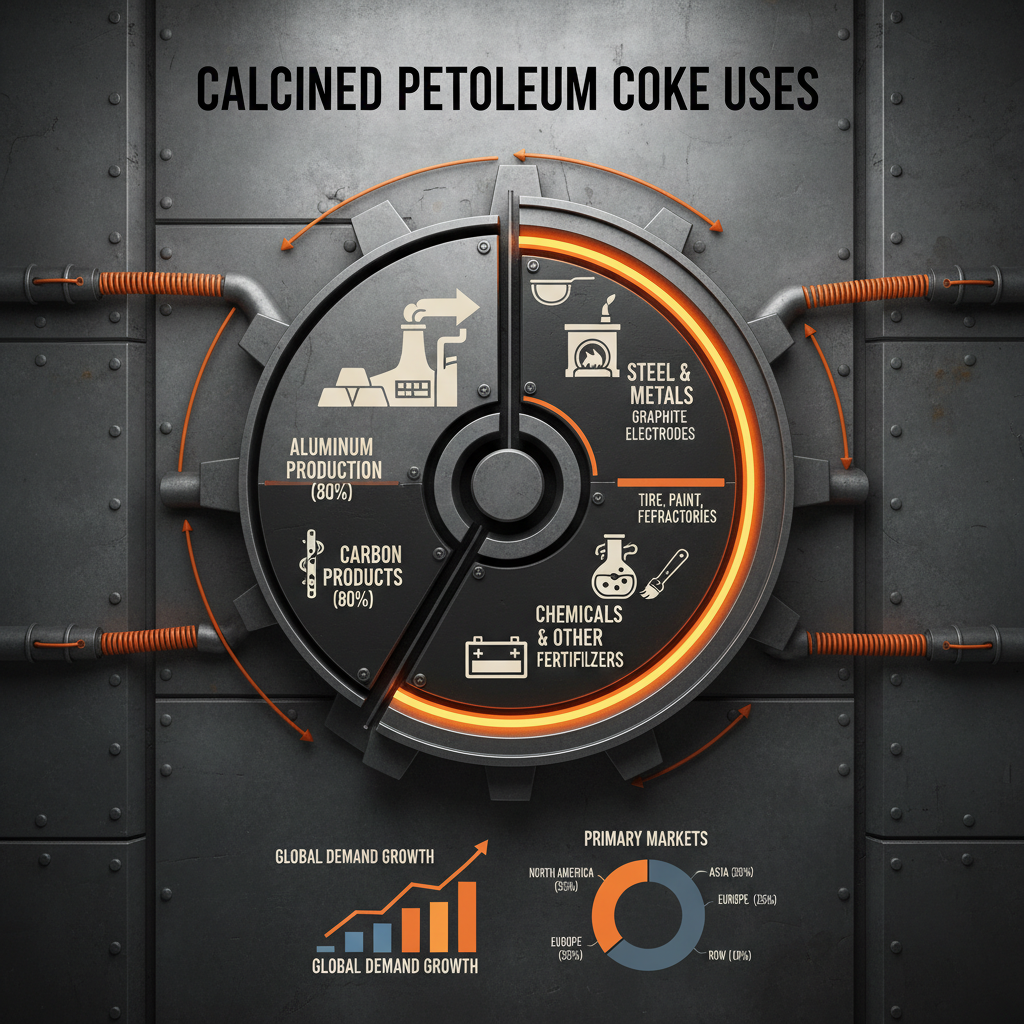
One of the largest applications of CPC lies in the aluminum industry. It functions as the primary carbon material in the anodes used in the Hall-Héroult process, the standard method for aluminum smelting. The anodes are consumed during electrolysis, providing the carbon necessary for the reaction that produces aluminum. The low sulfur content of CPC is particularly crucial here, as sulfur can negatively affect the efficiency and quality of the aluminum produced. The consistent properties of CPC ensure stable operation and optimal aluminum recovery.
Aluminum Industry Requirements:
• High carbon purity
• Low sulfur content
• Consistent particle size
• Good electrical conductivity
CPC Uses Beyond Aluminum: Steel Manufacturing & Graphite Electrode Production
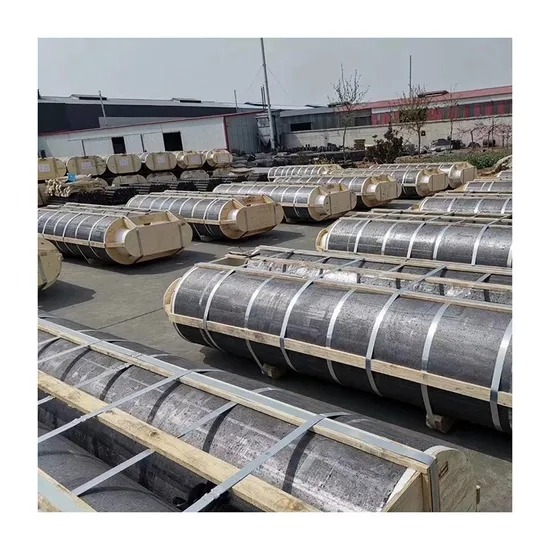
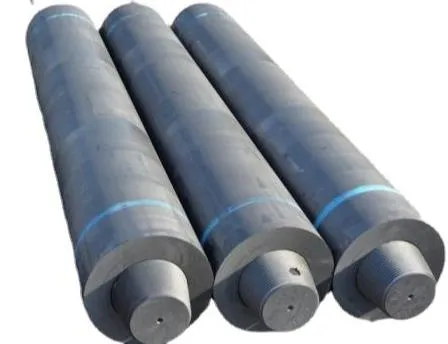
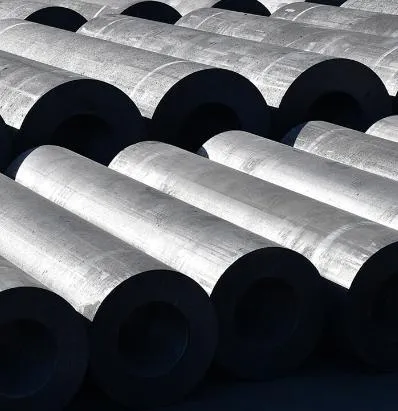
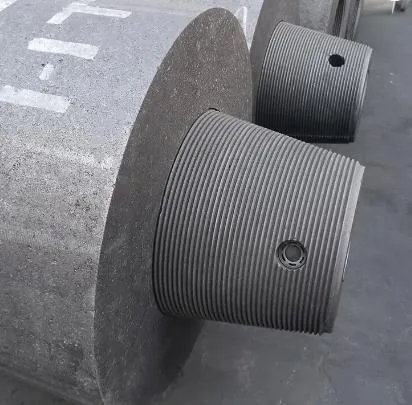
While aluminum production accounts for a substantial portion of CPC demand, its applications extend to other crucial industries. In steel manufacturing, CPC serves as a carbon raiser, increasing the carbon content of molten iron and steel. It also functions as a recarburizer, restoring carbon lost during the melting and refining processes. Furthermore, CPC is a key raw material in the production of graphite electrodes, used in electric arc furnaces (EAFs) for steelmaking. The quality of CPC directly impacts the performance and longevity of these electrodes. NL Graphite's CPC grades are optimized for diverse steelmaking applications.
Further Calcined Petroleum Coke Uses in Other Industries
Beyond the primary uses outlined above, CPC finds niche applications in various other sectors. These include the production of titanium dioxide pigment, where it serves as a fuel source, and the manufacturing of carbon brushes for electric motors. It is also utilized in the production of certain metallurgical products and as a component in some refractory materials. The versatility of CPC continues to drive its adoption in new and emerging applications, fueled by ongoing research and development.
CPC Product Specifications and Quality Control
Ensuring consistent quality is paramount when sourcing CPC. Key specifications to consider include fixed carbon content, sulfur content, ash content, volatile matter, and particle size distribution. Reputable suppliers, such as NL Graphite, employ rigorous quality control measures throughout the production process, from raw material selection to final product testing. These measures guarantee that the CPC meets the required standards for its intended application. Detailed product datasheets are typically available, providing comprehensive information about each grade of CPC.
Conclusion: The Enduring Importance of Calcined Petroleum Coke
Calcined Petroleum Coke remains a critical material for numerous industries, playing a pivotal role in the production of aluminum, steel, and various other essential products. Its unique properties—high carbon content, low sulfur levels, and consistent quality—make it irreplaceable in many applications. NL Graphite is dedicated to providing high-quality CPC solutions to meet the evolving needs of these industries.
Frequently Asked Questions (FAQs)
What factors affect the price of Calcined Petroleum Coke?
The price of CPC is influenced by a variety of factors, including crude oil prices, global supply and demand, transportation costs, and the specific grade and quality of the coke. Increases in crude oil prices generally lead to higher CPC prices. Demand from major consuming industries like aluminum production also plays a significant role. Geopolitical events and disruptions to supply chains can also cause price fluctuations. Furthermore, the specific requirements for sulfur content and particle size distribution can impact the price, as tighter specifications usually come at a premium.
Is CPC considered an environmentally friendly material?
While CPC is a byproduct of oil refining, its environmental impact is a significant consideration. The low sulfur content of CPC is a positive aspect, as it minimizes sulfur dioxide emissions during combustion. However, CPC is a carbon-based material, and its use contributes to CO2 emissions. Responsible suppliers and end-users focus on optimizing combustion efficiency to reduce emissions and explore carbon capture technologies. Sustainable practices throughout the supply chain are crucial to mitigating the environmental footprint of CPC.
What are the typical packaging options for Calcined Petroleum Coke?
CPC is typically packaged in bulk bags (FIBCs) with varying capacities, commonly ranging from 1 to 1.5 metric tons. These bags are designed for easy handling and transport. Alternatively, CPC can be supplied in smaller bags or loose in trucks or railcars for large-volume deliveries. The packaging method depends on the customer’s requirements and the transportation logistics. Proper labeling and moisture protection are essential to ensure the quality of the CPC during storage and transit.
 Pervious
 Next
Next