

- Englist



Detailed Analysis of Calcined Petroleum Coke Manufacturing Process PDF

Calcined Petroleum Coke Manufacturing Process PDF: A Comprehensive Overview
Calcined petroleum coke (CPC) is a crucial carbon material used in a wide array of industrial applications, including aluminum production, steelmaking, and titanium dioxide pigment manufacture. Understanding the calcined petroleum coke manufacturing process is essential for ensuring product quality, optimizing efficiency, and meeting industry standards. This article provides a detailed exploration of the process, from raw material sourcing to final product characteristics. We will cover each stage, outlining the key parameters and technologies involved. NL Graphite is a leading supplier of high-quality CPC, and we are committed to providing our customers with the knowledge they need to make informed decisions.
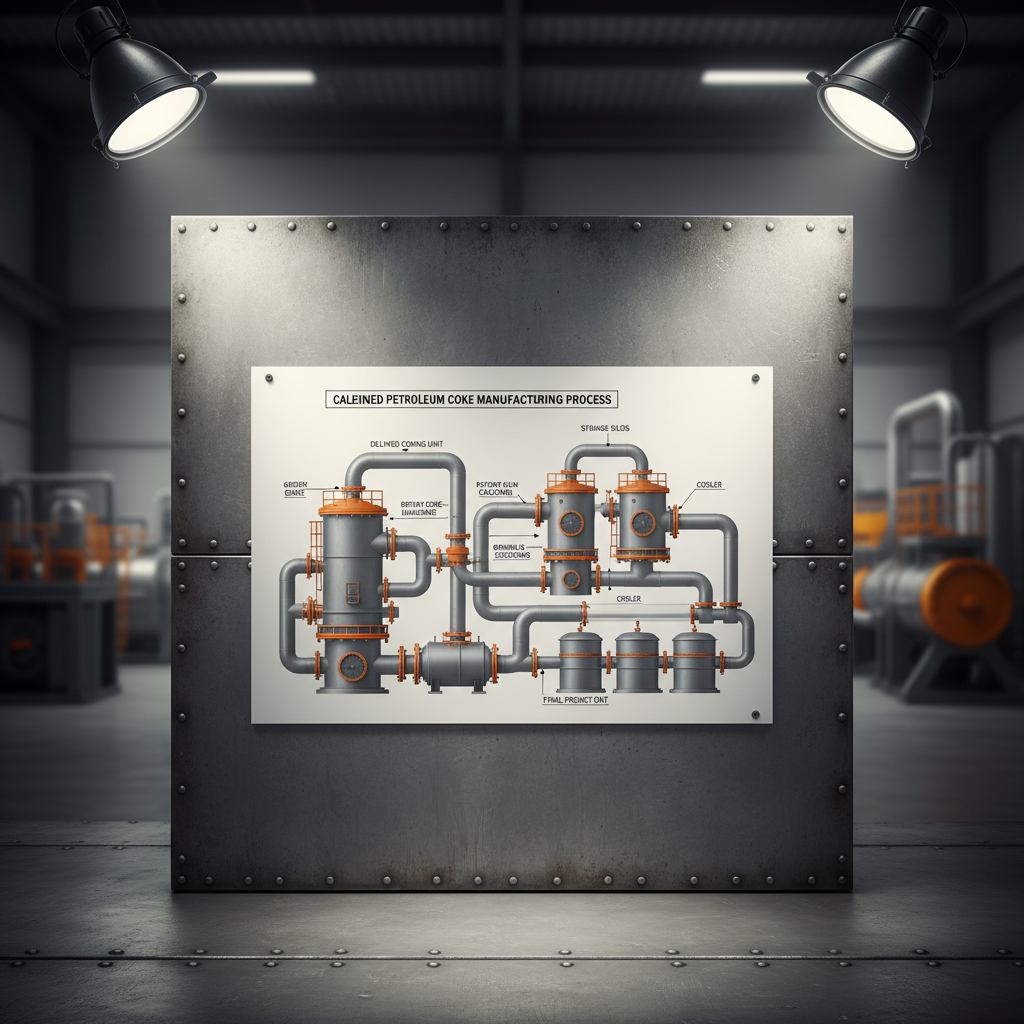
Raw Material Selection and Preparation
The primary raw material for CPC production is green petroleum coke (GPC), a byproduct of oil refining. GPC contains varying levels of impurities such as sulfur, nickel, vanadium, and moisture. The quality of GPC significantly impacts the final CPC product. Therefore, careful selection and preparation are critical. This preparation involves crushing, screening, and sometimes pre-calcination to reduce moisture content and improve homogeneity. NL Graphite meticulously sources GPC from reliable refineries to ensure consistent quality and performance.
Key Considerations: Selecting high-quality GPC is paramount. Lower impurity levels lead to higher-quality CPC and reduced environmental concerns. Proper preparation ensures uniform heating during calcination.
The Calcination Process: Core of CPC Production
Calcination is the central process in CPC manufacturing. It involves heating GPC to high temperatures (typically 1000-1600°C) in an oxygen-deficient atmosphere. This process removes volatile matter, reduces moisture content, and increases the carbon content. The calcination process is usually conducted in rotary kilns or fluid bed reactors. The temperature profile, residence time, and atmosphere control are crucial parameters influencing the final product properties. Effective calcination leads to a highly purified, dense, and electrically conductive carbon material.
Calcination Benefits:
• Removes volatile matter and impurities
• Increases carbon content and purity
• Enhances electrical conductivity
• Improves density and structural integrity
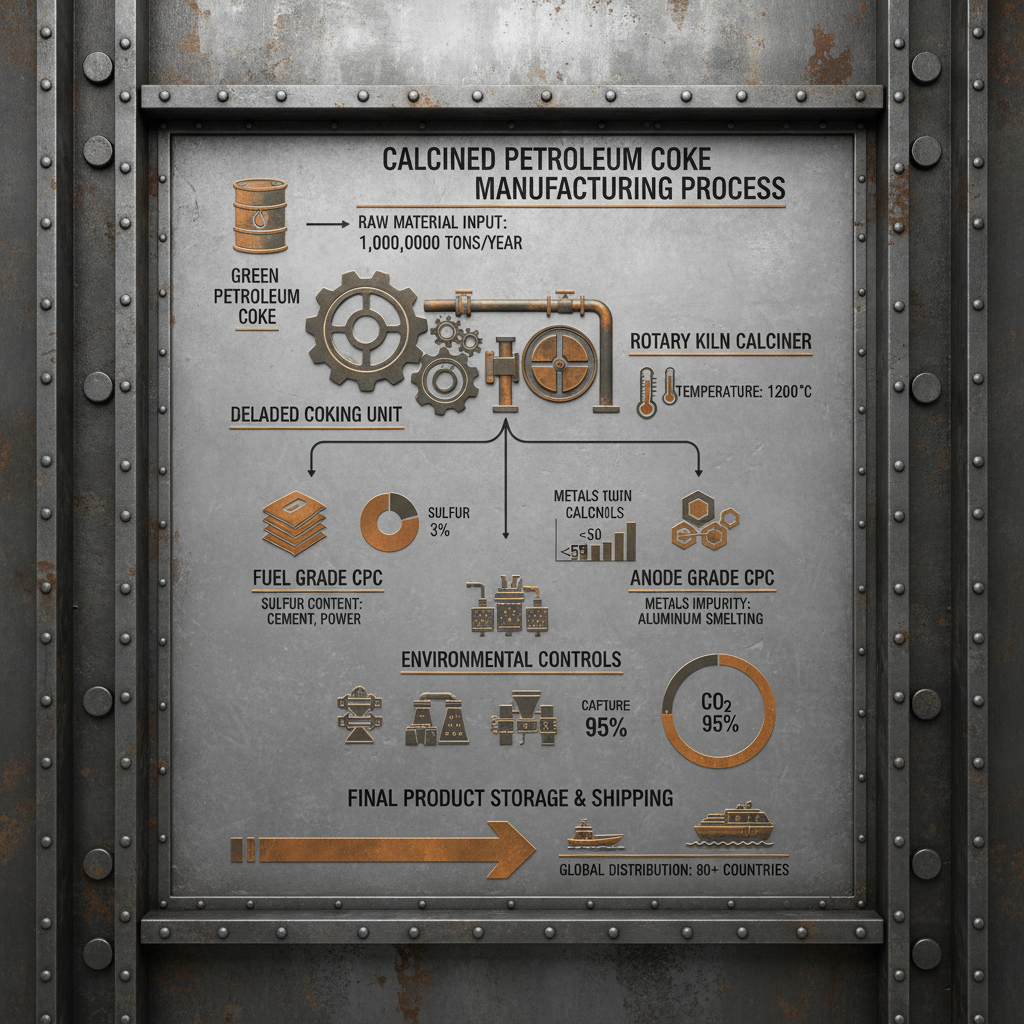
Calcined Petroleum Coke Manufacturing Process: A Detailed Flowchart
Understanding the sequence of operations in the CPC manufacturing process is vital. Here’s a simplified flowchart illustrating the key stages:
Cooling, Grinding, and Classification
Following calcination, the CPC is rapidly cooled to prevent graphitization and stabilize the carbon structure. This is often achieved using water quenching or air cooling. The cooled material then undergoes grinding and classification to achieve the desired particle size distribution. This step is critical for applications requiring specific surface areas and reactivity. NL Graphite offers CPC in a variety of particle sizes to meet diverse customer needs.
Quality Control and Product Specifications
Rigorous quality control is essential throughout the CPC manufacturing process. Key parameters monitored include carbon content, sulfur content, ash content, volatile matter, and particle size distribution. NL Graphite maintains strict quality control procedures to ensure consistent product performance. Here’s a sample product specification table:
Conclusion: Ensuring Quality and Reliability in CPC Production
The calcined petroleum coke manufacturing process is a complex undertaking requiring precise control and rigorous quality assurance. From careful raw material selection to optimized calcination parameters and final product specifications, each step plays a vital role in determining the final product's performance. NL Graphite is dedicated to providing high-quality CPC that meets the stringent requirements of our customers.
Frequently Asked Questions (FAQs)
What are the primary uses of calcined petroleum coke?
Calcined petroleum coke is a versatile material with numerous industrial applications. Its main uses include serving as a carbon source in the production of aluminum, acting as a reducing agent in steelmaking, and as a raw material for manufacturing titanium dioxide pigment. It’s also utilized in the production of graphite electrodes and various other carbon-based products due to its high carbon content and excellent electrical conductivity. The specific grade of CPC is often tailored to the requirements of each application.
What environmental considerations are important in CPC production?
CPC production can have environmental impacts, primarily related to emissions and waste generation. Controlling sulfur dioxide (SO2) emissions during calcination is crucial, and advanced emission control technologies are employed to minimize air pollution. Waste materials, such as dust and ash, are often recycled or disposed of responsibly. NL Graphite is committed to sustainable manufacturing practices and adheres to strict environmental regulations.
How does particle size affect the performance of CPC?
Particle size distribution significantly influences the performance of CPC in various applications. Finer particles generally offer a larger surface area, leading to increased reactivity and faster reaction rates. Coarser particles may be preferred for applications requiring lower reactivity or improved flowability. The optimal particle size depends on the specific application and process requirements. NL Graphite provides CPC in a range of particle sizes to meet diverse customer needs.
 Pervious
 Next
Next