

- Englist



Graphite vs Carbon Rod

In the world of industrial materials, both graphite rods and carbon rods play crucial roles across metallurgy, chemical production, power generation, and laboratory applications. Although they share similar origins and chemical properties, their performance, structure, and usage vary greatly. Understanding the difference between a graphite rod and a carbon rod helps engineers and manufacturers choose the right material for specific applications.
What Is a Graphite Rod?
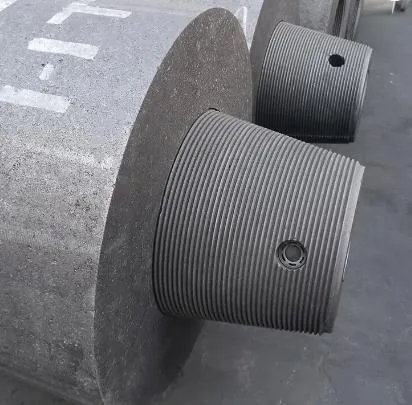
A graphite rod is a solid cylindrical product made from high-purity graphite. It is produced through a series of processes including carbonization, graphitization, and machining. Graphite rods are widely used for electrical discharge machining (EDM), high-temperature furnaces, chemical reactors, and metallurgical processing because of their superior electrical conductivity, thermal stability, and chemical resistance.
The production of graphite rods usually involves heating carbon materials at temperatures above 2,800°C, which transforms amorphous carbon into crystalline graphite. This process aligns the carbon atoms in a hexagonal lattice structure, giving graphite its unique combination of strength, conductivity, and lubricity.
Because of these properties, graphite rods are considered one of the most reliable materials for high-temperature and high-load environments. Whether used as electrodes, heating elements, or laboratory crucibles, graphite rods deliver consistent performance and long lifespan.
What Is a Carbon Rod?
A carbon rod, on the other hand, refers to a rod-shaped product made primarily from amorphous carbon without undergoing the graphitization process. These rods are typically formed by pressing and baking carbon-based materials such as petroleum coke or coal pitch at lower temperatures compared to graphite production.
While carbon rods also possess good mechanical strength and moderate electrical conductivity, they are less stable at high temperatures and more prone to oxidation. However, due to their lower production cost, carbon rods are still widely used in battery manufacturing, electrolysis, and basic electrical applications where extreme thermal conditions are not present.
In short, a carbon rod is the precursor material of a graphite rod. With additional heat treatment and refinement, a carbon rod can be converted into a graphite rod with enhanced performance.
Main Differences Between Graphite Rod and Carbon Rod
Although both belong to the carbon material family, graphite rods and carbon rods differ in several key aspects:
1. Structure and Manufacturing Process
-
Graphite rod: Undergoes graphitization at ultra-high temperatures, forming a crystalline graphite structure with high purity and density.
-
Carbon rod: Made by carbonizing raw materials at lower temperatures without full crystallization.
2. Electrical Conductivity
-
Graphite rod: Excellent conductor of electricity, commonly used in EDM electrodes and electric arc furnaces.
-
Carbon rod: Moderate conductor, suitable for small-scale electrical uses such as dry batteries.
3. Thermal Resistance
-
Graphite rod: Can withstand temperatures above 3,000°C without melting, making it ideal for high-temperature operations.
-
Carbon rod: Limited temperature resistance, begins to degrade or oxidize at lower temperatures.
4. Chemical Stability
-
Graphite rod: Resistant to most acids, alkalis, and solvents, and suitable for harsh chemical environments.
-
Carbon rod: Less resistant to corrosion and chemical attack.
5. Cost and Application Range
-
Graphite rod: More expensive but offers higher performance and longer lifespan.
-
Carbon rod: Cheaper alternative for non-critical applications.
These differences explain why graphite rods are preferred in industrial, metallurgical, and scientific fields, while carbon rods are mostly used in consumer products and basic electrical applications.
Applications of Graphite Rod
Because of its outstanding material properties, the graphite rod is essential in many industries:
-
Metallurgy and Foundry
Graphite rods serve as electrodes in electric arc furnaces for steelmaking, aluminum refining, and metal casting. They ensure stable current flow and can endure repeated high-temperature cycles. -
Chemical Industry
In corrosive environments, graphite rods are used in acid-resistant equipment, chemical reactors, and heat exchangers because they maintain integrity under harsh conditions. -
Electronics and Energy
Graphite rods are applied in batteries, fuel cells, and supercapacitors, where high conductivity and low resistance are required. -
Laboratory and Research
In laboratories, graphite rods are used as electrodes for electrolysis and supports in high-temperature furnaces. Their ability to withstand oxidation and maintain structural stability is crucial for precise experiments. -
Machining and Molding
Due to their easy machinability, graphite rods are commonly shaped into precision components, molds, or crucibles for industrial production.
Why Choose Graphite Rods from Shijiazhuang Nalai Biotechnology Co., Ltd
When selecting high-quality graphite materials, the manufacturer’s capability plays a decisive role. Shijiazhuang Nalai Biotechnology Co., Ltd is a professional graphite rod manufacturer integrating design, development, trial, and full production.
We specialize in graphite electrode, graphite rod, graphite block, and graphite crucible manufacturing with advanced processing equipment and strict quality management systems. Our team includes 30 experienced technicians and 360 skilled workers, ensuring every graphite rod meets international standards.
Our company adheres to the principles of “quality first, service first, and continuous innovation” to deliver premium products at competitive prices. With rich experience in international trade, we have established long-term partnerships in more than 20 countries, including the United States, Germany, Brazil, Pakistan, Thailand, and Malaysia.
Custom styles and sizes of graphite rods are available according to your application needs. Whether you require high-purity rods for laboratory work or large industrial rods for furnaces, our factory can provide a reliable solution backed by technical expertise and global service support.
The Future of Graphite and Carbon Materials
As industries move toward sustainability and high-efficiency manufacturing, demand for advanced carbon materials continues to rise. Graphite rods, in particular, will play an increasingly important role in energy storage systems, electric vehicles, and high-temperature applications.
Compared with carbon rods, graphite rods offer superior durability, performance, and conductivity — qualities essential for next-generation industrial technology. Manufacturers who invest in high-quality graphite materials today will gain a competitive edge in tomorrow’s market.
While graphite rods and carbon rods share the same elemental composition, their properties and performance levels differ significantly. The graphite rod stands out for its high temperature resistance, excellent conductivity, and long service life, making it a top choice in demanding industrial and scientific environments.
When sourcing premium graphite products, Shijiazhuang Nalai Biotechnology Co., Ltd provides reliable, cost-effective solutions that combine technological strength with global experience. We welcome customers worldwide to explore our graphite materials and experience the quality difference that sets us apart.
 Pervious
 Next
Next