

- Englist



Understanding the Carburizing Hardening Process for Enhanced Steel Components

Understanding the Carburizing Hardening Process
The carburizing hardening process is a crucial heat treatment used to enhance the surface hardness and wear resistance of steel components. This process involves diffusing carbon into the surface of the steel, followed by hardening. It’s widely applied in industries requiring durable and long-lasting parts, such as automotive, aerospace, and manufacturing. Understanding the nuances of this process is vital for achieving optimal results and extending the service life of critical components. At NL Graphite, we provide high-quality graphite crucibles and materials essential for effective carburizing operations.
What is the Carburizing Hardening Process?
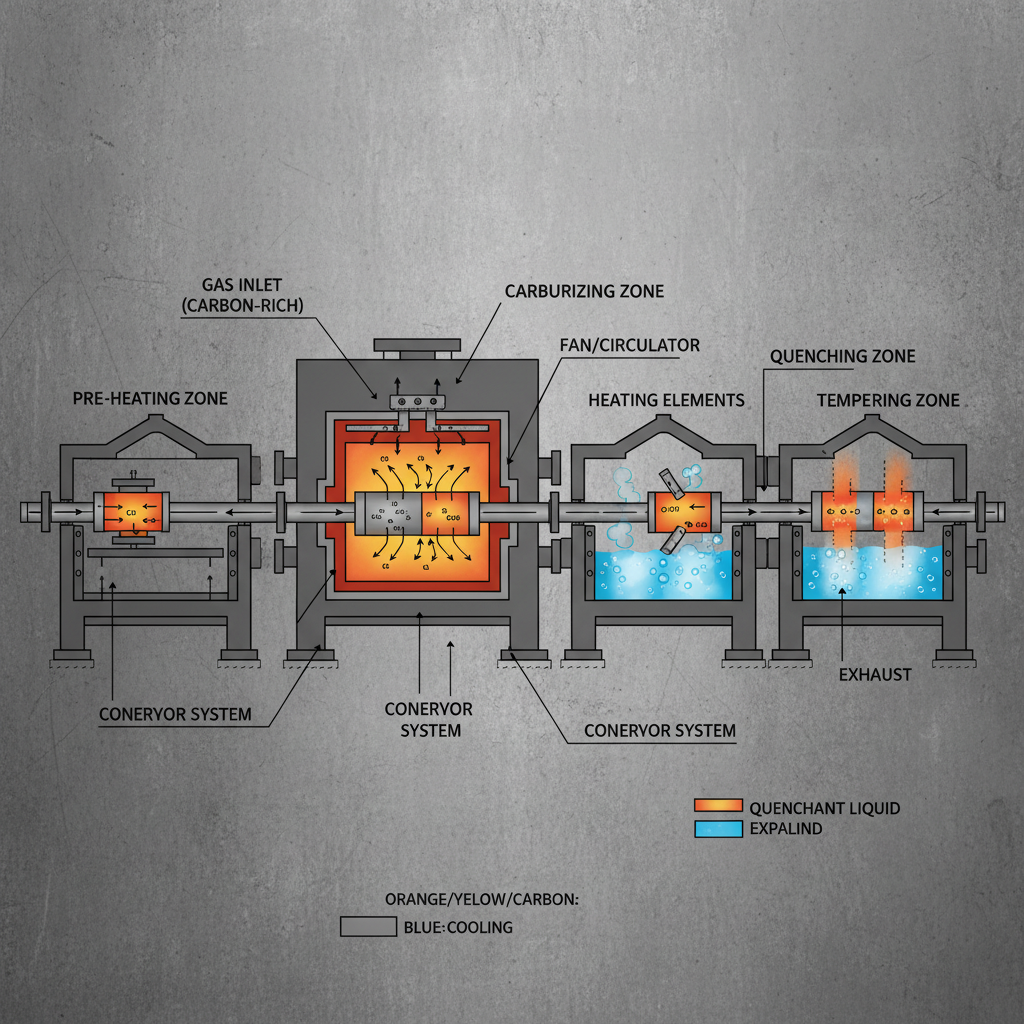
The carburizing hardening process, in essence, increases the carbon content in the surface layer of a low-carbon steel. This is accomplished by exposing the steel to a carbon-rich environment at elevated temperatures. Common carburizing environments include solid, liquid, and gaseous carbon sources. After carburization, the steel is quenched rapidly, resulting in a hard, wear-resistant surface while maintaining a tough, ductile core. This combination is ideal for components subjected to significant stress and friction. The process is critically dependent on factors like temperature, time, carbon potential, and the composition of the steel being treated.
Key Takeaway: The carburizing hardening process creates a hard, wear-resistant surface on steel while maintaining a tough, ductile core, extending the component's lifespan and performance.
Types of Carburizing Processes
There are three main types of carburizing processes, each with its advantages and disadvantages: pack carburizing, liquid carburizing, and gas carburizing. NL Graphite's materials are frequently used in supporting these processes. Choosing the appropriate method depends on factors like batch size, required carbon depth, and cost considerations.
Carburizing Process Comparison:
- Pack Carburizing: Uses a solid carbon source mixed with the steel parts. Simple and cost-effective for small batches.
- Liquid Carburizing: Employs a molten salt bath containing carbon-bearing compounds. Offers faster carburization rates.
- Gas Carburizing: Utilizes a carbon-rich gas atmosphere. Provides precise control over carbon potential and depth.
Key Factors Influencing the Carburizing Process
Several key factors influence the effectiveness of the carburizing hardening process. These include the temperature, time, carbon potential of the atmosphere, the type of steel, and the cooling rate. Maintaining precise control over these parameters is crucial for achieving the desired case depth and hardness. Furthermore, the quality of the graphite crucibles used for holding and transferring the components significantly impacts the consistency of the process. Improper control can lead to uneven carburization, distortion, or cracking.
Applications of Carburizing and Material Considerations
Carburizing is widely used in the production of gears, bearings, shafts, and other components that require high wear resistance. Low and medium carbon steels are typically used as base materials. The resulting hardened surface allows these components to withstand heavy loads and abrasive conditions. The careful selection of materials – including high-purity graphite crucibles from NL Graphite – is essential to prevent contamination and ensure the integrity of the carburized components.
Conclusion: Optimizing Performance with Carburizing
The carburizing hardening process remains a vital heat treatment for enhancing the durability and performance of steel components. By carefully controlling the process parameters and utilizing high-quality materials – including graphite solutions from NL Graphite – manufacturers can achieve superior results and extend the lifespan of critical parts. Investing in proper carburizing techniques translates to increased efficiency, reduced maintenance costs, and improved product reliability.
Frequently Asked Questions (FAQs)
What is the typical case depth achieved during carburizing?
Case depth, which refers to the depth of the hardened layer, varies depending on the specific process parameters and steel composition. Generally, case depths range from 0.025mm to 2.5mm. Shallow case depths are suitable for components requiring mild wear resistance, while deeper case depths are used for high-stress applications. The carbon potential and diffusion time are the primary factors controlling case depth. Proper monitoring and control are critical to achieving the desired depth.
What types of quenching media are used after carburizing?
Common quenching media include oil, water, and polymer solutions. Oil quenching is frequently used for its controlled cooling rate, minimizing distortion. Water quenching provides faster cooling rates but can increase the risk of cracking. Polymer quenchants offer a balance between cooling rate and distortion control. The choice of quenching medium depends on the steel’s composition, the desired hardness, and the component’s geometry.
How does the graphite crucible material impact the carburizing process?
The graphite crucible is critical for maintaining a clean carburizing environment. High-purity graphite, like those offered by NL Graphite, minimizes contamination and ensures consistent carbon transfer. Inferior graphite can introduce impurities into the steel, affecting the hardness and mechanical properties. Furthermore, the crucible's thermal stability and resistance to cracking are essential for maintaining process integrity. Choosing the right graphite grade is, therefore, a crucial step in successful carburizing.
 Pervious
 Next
Next