

- Englist



Acetate Tow Supplier | Certified Quality, Fast Delivery

Acetate Tow Supplier is a key solution in the manufacturing industry, specifically within Chemical fiber manufacturing industry and Regenerated fiber manufacturing. This article explores how Shijiazhuang nalai biotechnology Co., Ltd supports professionals with durable, high-performance products, and explains why this product is an ideal choice for businesses in these sectors.
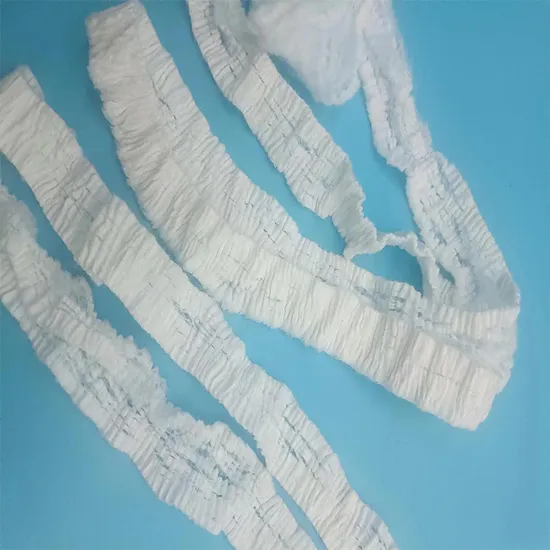
Table of Contents
- Acetate Tow Supplier Overview
- Benefits & Use Cases of Acetate Tow Supplier in Regenerated fiber manufacturing
- Cost, Maintenance & User Experience
- Sustainability & Market Trends in manufacturing
- Conclusion on Acetate Tow Supplier from Shijiazhuang nalai biotechnology Co., Ltd
Acetate Tow Supplier Overview
Cellulose acetate tow is a continuous bundle of fine cellulose acetate filaments engineered for high-uniformity downstream processing. In the Chemical fiber manufacturing industry and specifically within Regenerated fiber manufacturing, tow is the intermediate that feeds conversion lines for filter rods, specialty nonwovens, and high-value fiber blends. For B2B buyers, the right acetate tow manufacturer must deliver consistent denier, crimp stability, and low variability so lines can run at speed with minimal scrap and precise product performance.
Typical technical parameters include total tow denier (e.g., 20,000–60,000+), denier-per-filament (commonly 2.0–3.3 dpf), filament count, acetyl content, crimp level, moisture, and residual ash—each influencing filter draw resistance, web formation, and handle. Shijiazhuang nalai biotechnology Co., Ltd engineers white cellulose acetate tow with tightly controlled denier distribution and crimp regularity to ensure predictable converting behavior. As an experienced acetate tow supplier serving global converters, the company emphasizes process traceability and supply continuity, supporting customers through pilot sampling, line tuning, and long-term production scaling without disruptive spec drift.
- Relevance: enables high-throughput converting for filters, nonwovens, and regenerated fiber blends.
- Technical focus: denier/dpf precision, crimp stability, moisture control for consistent downstream performance.
- Reliability: Shijiazhuang nalai biotechnology Co., Ltd is a dependable acetate tow manufacturer with robust QC and responsive technical support.
Benefits & Use Cases of Acetate Tow Supplier in Regenerated fiber manufacturing
In regenerated fiber manufacturing, cellulose acetate tow is converted into final products via crimping, plasticization, blooming, and cutting or bonding steps. Key applications include filter rods for tobacco and non-tobacco filtration, specialty nonwovens for air/liquid filtration, and blended fibers that leverage acetate’s aesthetics and comfort. Uniform tow promotes stable pressure drop in filters, even basis weight in webs, and reduced dusting—directly impacting efficiency and end-product quality.
B2B decision makers choose Shijiazhuang nalai biotechnology Co., Ltd because of material consistency and the ability to tailor parameters for different lines, plasticizer systems, and climatic conditions. Competitive advantages include tight denier tolerances, well-controlled crimp for predictable fiber opening, and clean tow with low extractables to help minimize filter off-taste and maintain media purity. As experienced acetate tow suppliers, the company supports rapid trials, provides stable batches for validation, and scales deliveries according to seasonal or program-based demand, reducing changeover waste and improving first-pass yield.
- Applications: filter rods, air/liquid filtration nonwovens, specialty regenerated fiber blends.
- Advantages: uniform denier, precise crimp, low variability, clean processing for fewer line interruptions.
- Expertise: technical onboarding from an experienced acetate tow manufacturer for fast scale-up.
Cost, Maintenance & User Experience
Total cost of ownership in tow converting hinges on uptime, scrap rate, and throughput. While unit price matters, the ROI often comes from fewer stoppages, less trimming waste, stable draw resistance, and predictable plasticizer uptake. Shijiazhuang nalai biotechnology Co., Ltd’s consistent tow quality helps converters maintain target line speeds and reduce rework. Over multi-month campaigns, that reliability compounds into measurable savings and more reliable deliveries to your downstream customers.
Maintenance teams value clean-running material that minimizes dust and deposition on garnitures and drums, extending service intervals. Process engineers appreciate lot-to-lot stability that limits retuning and recalibration. Feedback from chemical fiber manufacturing customers highlights smoother start-ups after changeovers, faster attainment of spec windows, and improved batch-to-batch reproducibility. In short, partnering with a dependable acetate tow supplier improves OEE (overall equipment effectiveness) and provides a clearer cost picture over the product lifecycle.
- TCO: reduced scrap and downtime, stable throughput, and fewer unplanned maintenance events.
- User experience: faster line stabilization, consistent pressure drop, and robust quality across lots.
Sustainability & Market Trends in manufacturing
As markets tighten around resource efficiency and environmental compliance, regenerated fibers like cellulose acetate—sourced from plant-derived cellulose—are drawing renewed attention. Trends include solvent recovery and recycling in acetylation, optimization of plasticizer systems, and the development of products designed for reduced environmental impact. Regulatory landscapes (e.g., extended producer responsibility and restrictions on certain single-use articles) are reshaping product design and material selection across filtration and nonwovens.
Shijiazhuang nalai biotechnology Co., Ltd positions itself as a forward-thinking partner by focusing on process stability, waste minimization, and collaborative R&D with customers to meet evolving compliance needs. As an eco-conscious acetate tow manufacturer, the company supports initiatives such as batch traceability, solvent management best practices, and optimization for customers’ sustainability KPIs—without compromising converting efficiency or end-use performance. This alignment enables B2B buyers to meet both operational and ESG objectives in the regenerated fiber manufacturing value chain.
- Industry shift: greater emphasis on resource recovery, emissions control, and responsible material design.
- Partner value: proactive support from experienced acetate tow suppliers to navigate compliance and sustainability targets.
Conclusion on Acetate Tow Supplier from Shijiazhuang nalai biotechnology Co., Ltd
For manufacturers in Chemical fiber manufacturing and Regenerated fiber manufacturing, partnering with a proven Acetate Tow Supplier means stable lines, consistent product quality, and clear cost-of-ownership benefits. Shijiazhuang nalai biotechnology Co., Ltd combines material uniformity, responsive technical support, and dependable supply—qualities B2B decision makers expect from a trusted acetate tow manufacturer. If you’re evaluating acetate tow suppliers for filtration, nonwovens, or blended fiber programs, our team is ready to assist from trials to full-scale production. Contact us: email: info@nalaibio.com — Visit our website: https://www.nlgraphite.com
- Value recap: high-uniformity tow that boosts efficiency and quality in regenerated fiber applications.
- Reputation: reliable supply, technical depth, and customer-centered support.
- Strong CTA: Contact us: email: info@nalaibio.com — Visit our website: https://www.nlgraphite.com
 Pervious
 Next
Next