

- Englist


Comprehensive Guide to the Carburising Heat Treatment Process and its Applications

Carburising Heat Treatment Process: A Comprehensive Guide
The carburising heat treatment process is a vital case hardening method used to enhance the surface hardness and wear resistance of steel components. This process involves diffusing carbon into the surface of a low-carbon steel, creating a hard, wear-resistant outer layer while maintaining a tough, ductile core. Understanding the intricacies of carburising is crucial for manufacturers across numerous industries, from automotive to aerospace. NL Graphite specializes in providing high-quality graphite materials essential for efficient and consistent carburising processes. This article will delve into the specifics of carburising, its various methods, advantages, applications, and crucial considerations for optimal results.
Understanding the Carburising Heat Treatment Process
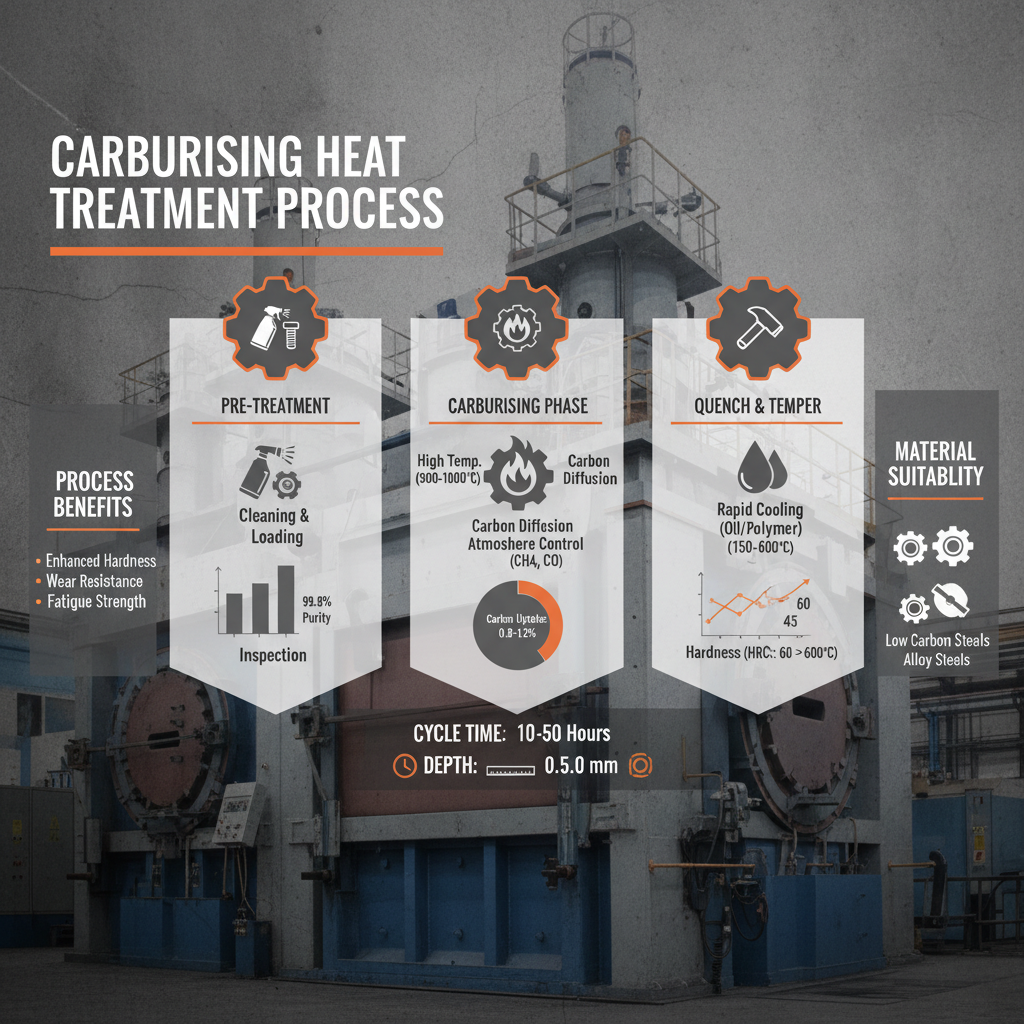
At its core, the carburising heat treatment process relies on introducing carbon into the steel's surface. This is achieved by heating the steel in a carbon-rich atmosphere, allowing carbon atoms to diffuse into the steel's crystalline structure. The depth of carbon diffusion, and thus the case depth, is controlled by factors such as temperature, time, and carbon potential. The result is a surface layer significantly harder than the core material, providing exceptional wear resistance and fatigue strength. This process is commonly used on parts that require a tough core combined with a wear-resistant surface, such as gears, shafts, and bearings.
Methods of Carburising
Several methods exist for performing carburising, each offering distinct advantages and disadvantages. These include:
- Pack Carburising: The oldest method, involving enclosing the steel parts in a sealed container with a carbon-rich solid material (the 'pack').
- Gas Carburising: Utilizes carbon-bearing gases, such as methane and propane, in a controlled atmosphere furnace.
- Liquid Carburising: Involves immersing the steel parts in a molten salt bath containing carbon-bearing compounds.
- Plasma Carburising (Ion Carburising): A more modern technique that uses ionized carbon-containing gases to accelerate carbon diffusion.
The choice of method depends on factors such as the size and complexity of the parts, required case depth, production volume, and budget. NL Graphite's materials are particularly well-suited for gas and plasma carburising due to their high purity and consistent performance.
Advantages of the Carburising Heat Treatment Process
The carburising heat treatment process provides numerous benefits over alternative surface hardening methods:
- Enhanced Wear Resistance: Significantly increases the component's resistance to abrasion, erosion, and galling.
- Improved Fatigue Strength: The hardened surface layer introduces compressive stresses, improving resistance to fatigue failure.
- Tough Core: Maintains a ductile core, providing impact resistance and preventing brittle fracture.
- Good Load-Carrying Capacity: Ideal for components subjected to high contact stresses.
- Cost-Effective: Relatively affordable, particularly for large-volume production runs.
Key Benefit: Combining a hard, wear-resistant surface with a tough, ductile core allows for longer component life and improved performance in demanding applications.
Carburising Process Parameters and Control
Effective control of process parameters is paramount for achieving the desired case depth and surface hardness. Key parameters include temperature, time, carbon potential, and cooling rate. Temperature significantly influences the diffusion rate of carbon. Higher temperatures accelerate diffusion but can also lead to grain growth. Time determines the case depth – longer times result in deeper cases. Carbon potential, measured by the carbon concentration in the atmosphere, dictates the amount of carbon available for diffusion. Finally, the cooling rate impacts the microstructure of the case, influencing its hardness and brittleness. Precise temperature control, facilitated by high-quality furnace components like those offered by NL Graphite, is essential for consistent results.
Applications of Carburised Components
Components undergoing the carburising heat treatment process are found in a vast array of applications. Some key examples include:
- Automotive: Gears, camshafts, crankshafts, and bearings.
- Aerospace: Landing gear components, engine parts, and fasteners.
- Manufacturing: Molds, dies, and cutting tools.
- Oil & Gas: Pump shafts, valve stems, and drilling equipment.
- Heavy Equipment: Transmission gears, axles, and drive shafts.
The superior wear resistance and fatigue strength imparted by carburising contribute to the reliability and longevity of these critical components.
Conclusion: Optimizing Performance with Carburising
The Power of Carburising
The carburising heat treatment process remains a cornerstone of materials engineering, delivering exceptional performance enhancements for critical components. By carefully controlling process parameters and utilizing high-quality materials – such as those available from NL Graphite – manufacturers can unlock the full potential of this versatile technique. Investing in robust carburising processes translates to increased product reliability, extended component life, and reduced downtime.
Frequently Asked Questions (FAQs)
What types of steel are suitable for carburising?
Low-carbon steels (typically containing 0.15% to 0.30% carbon) are ideally suited for carburising. These steels possess sufficient ductility to withstand the stresses induced during the process and readily absorb carbon. Alloy steels containing elements like manganese, chromium, and nickel are also commonly used to enhance hardenability and toughness. Higher carbon content steels are generally not carburised as they already possess sufficient hardness and may become brittle.
What is the typical case depth achieved in carburising?
The case depth achieved in carburising varies depending on the process parameters, steel composition, and desired application. Typically, case depths range from 0.5mm to 2.5mm (0.02" to 0.1"). For heavily loaded gears, case depths of 1.5mm to 2.5mm are common. Shallower case depths are sufficient for components requiring moderate wear resistance. Precise control of temperature and time is crucial for achieving the target case depth.
What are the potential drawbacks of carburising?
While carburising offers significant advantages, there are some potential drawbacks. The process can be time-consuming and energy-intensive. Distortion of the component can occur during heating and cooling, necessitating subsequent machining operations. Furthermore, the hardened case can be brittle and prone to cracking if not properly supported by the core material. Proper process control and steel selection are essential to mitigate these risks.
 Pervious
 Next
Next