

- Englist



Exploring Petroleum Coke Usage Across Industries and its Future Trends

Petroleum Coke Usage: A Comprehensive Guide
Petroleum coke (petcoke) is a carbon-rich solid derived from oil refining, and its applications are surprisingly diverse. From aluminum production to the steel industry, and even extending to the manufacturing of tires, petcoke plays a critical role. Understanding its properties, different grades, and emerging trends is crucial for businesses involved in these sectors. At NL Graphite, we specialize in high-quality graphite solutions that complement and sometimes substitute petcoke in various industrial processes. This article will explore the intricacies of petroleum coke usage, providing a detailed overview for professionals and businesses alike.
Understanding the Different Grades of Petroleum Coke
Petroleum coke isn't a one-size-fits-all material. It's categorized into different grades based on its sulfur content and metal impurities. The two primary classifications are Calcined Petroleum Coke (CPC) and Fluid Petroleum Coke (FPC). CPC undergoes a calcination process, heating it to high temperatures to reduce its sulfur content, making it suitable for demanding applications like aluminum smelting. FPC, on the other hand, is produced directly from the coking process and generally has a higher sulfur content, often used in power generation and cement manufacturing. Choosing the correct grade is crucial for optimizing performance and minimizing environmental impact.
Key Applications of Petroleum Coke Across Industries
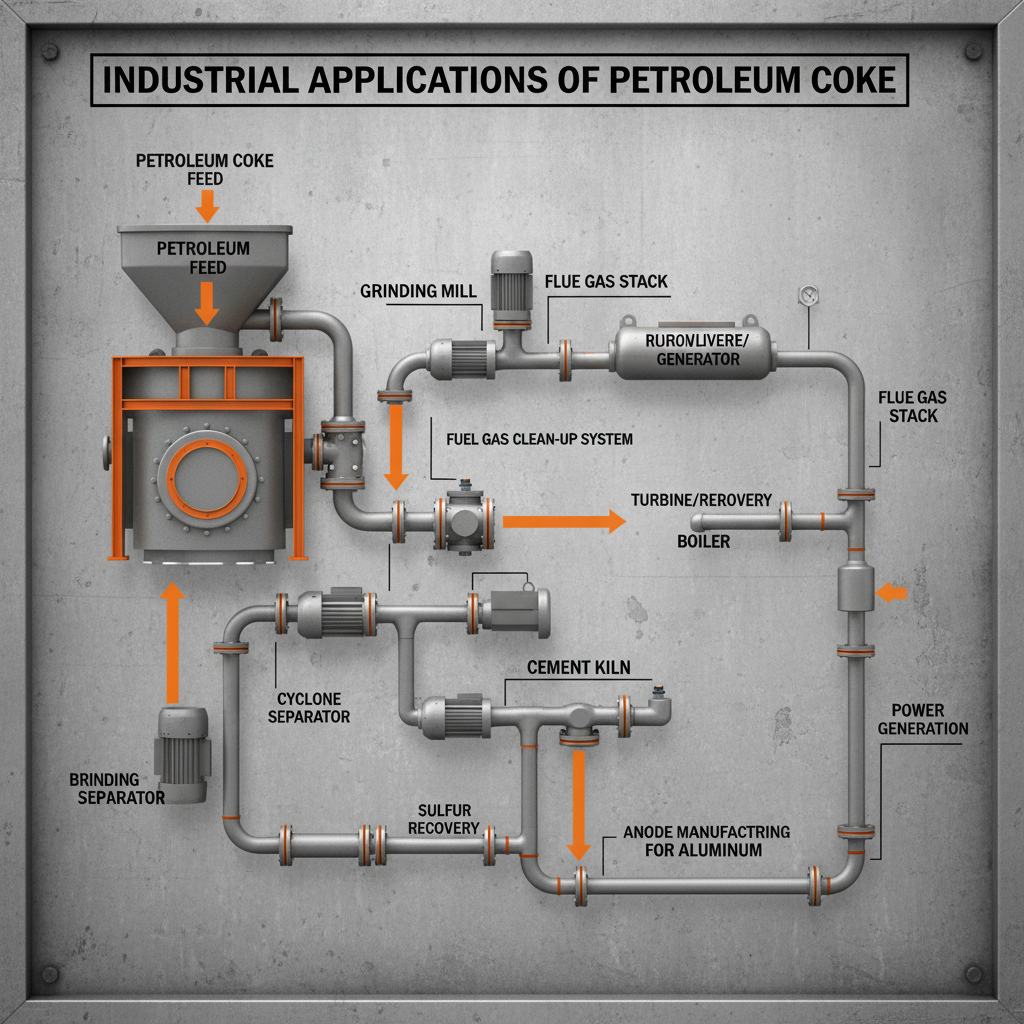
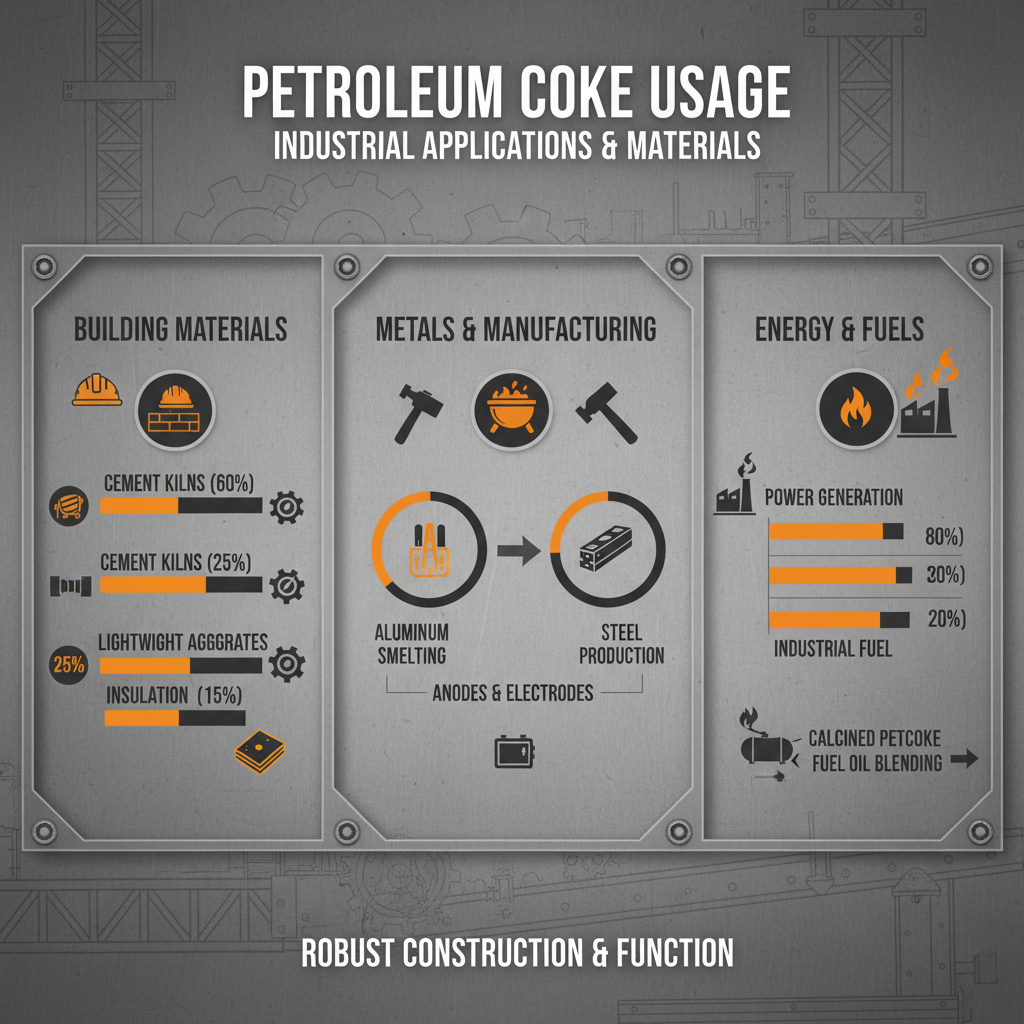
The versatility of petcoke stems from its high carbon content and relatively low cost. Here’s a breakdown of its major applications: Aluminum production uses CPC as an essential component in the electrolytic smelting process. Steel manufacturing relies on petcoke as a carbon raiser and reductant. Cement production utilizes petcoke as an alternative fuel source, offering cost savings and reducing reliance on traditional fossil fuels. Foundry applications benefit from petcoke's unique properties in core making and cupola furnaces. Even the tire industry uses petcoke as a filler material in rubber compounds. The consistent demand across these sectors underlines the importance of a stable petcoke supply chain.
Key Applications at a Glance: Aluminum production, Steel manufacturing, Cement production, Foundry applications, and Tire industry.
Petroleum Coke Usage vs. Graphite: A Comparative Analysis
While petcoke remains a prevalent material, graphite is increasingly gaining traction as a viable alternative in certain applications. Graphite offers advantages in terms of purity, conductivity, and lower environmental impact. However, it typically comes at a higher cost. The decision between petcoke and graphite hinges on specific performance requirements, budgetary constraints, and sustainability goals. NL Graphite provides solutions tailored to these needs, offering a range of graphite products that can effectively replace petcoke in various processes.
The Future of Petroleum Coke: Trends and Challenges
The petcoke market is facing increasing scrutiny due to environmental concerns related to its sulfur content and emissions. Regulations are becoming stricter, driving demand for lower-sulfur grades and alternative materials. Moreover, the shift towards renewable energy sources is impacting the demand for petcoke in power generation. Despite these challenges, petcoke is expected to remain a significant material in industries like aluminum and steel for the foreseeable future. However, innovation in processing techniques and the development of cleaner technologies will be essential for its long-term sustainability.
NL Graphite: Your Partner for Graphite Solutions
At NL Graphite, we provide high-quality graphite products tailored to meet the evolving needs of various industries. We offer a wide range of graphite grades and custom solutions to replace petcoke in applications requiring higher purity, conductivity, and sustainability. Our team of experts can help you evaluate your specific requirements and identify the optimal graphite solution for your business. Explore our product offerings and contact us today to learn more.
Conclusion: Navigating the Future of Carbon Materials
Understanding petroleum coke usage, its limitations, and the emerging alternatives like graphite is vital for businesses seeking to optimize performance and sustainability. NL Graphite is committed to providing innovative graphite solutions that meet the challenges of today and pave the way for a more sustainable future.
Frequently Asked Questions (FAQs)
What are the environmental concerns associated with petroleum coke?
The primary environmental concern is the sulfur content of petcoke, particularly in lower grades. Burning high-sulfur petcoke releases sulfur dioxide (SO2) into the atmosphere, contributing to acid rain and respiratory problems. Additionally, the extraction and processing of petroleum coke can have environmental impacts related to land use and water pollution. Regulations are increasingly focused on reducing SO2 emissions from petcoke combustion and promoting the use of lower-sulfur grades or alternative fuels.
Can graphite completely replace petroleum coke in all applications?
While graphite offers a compelling alternative in many applications, a complete replacement isn’t always feasible. Graphite is generally more expensive than petcoke, which can be a significant factor for cost-sensitive industries. Moreover, graphite's specific properties might not be suitable for all processes. However, for applications requiring high purity, conductivity, and lower environmental impact, graphite is often the preferred choice. The optimal solution often involves a careful evaluation of performance requirements, cost constraints, and sustainability goals.
What are the benefits of using graphite instead of petcoke?
Graphite offers several advantages over petcoke, including higher purity, excellent electrical and thermal conductivity, and a lower environmental footprint. It doesn't contain sulfur, eliminating SO2 emissions. Graphite is also more chemically inert, making it suitable for applications where corrosion resistance is crucial. Furthermore, graphite's consistent properties ensure reliable performance and can lead to improved process efficiency.
Where can I source high-quality graphite for industrial applications?
NL Graphite is a leading supplier of high-quality graphite products for various industrial applications. We offer a comprehensive range of graphite grades, custom solutions, and expert technical support to help you optimize your processes. Contact us today to discuss your specific needs and receive a customized quote.
 Pervious
 Next
Next