

- Englist



Petcoke Usage in Cement Industry Optimizing Fuel and Reducing Emissions

Petcoke Usage in Cement Industry: A Comprehensive Overview
The cement industry is a significant consumer of energy and raw materials. Petcoke, a byproduct of oil refining, has emerged as a crucial alternative fuel and reducing agent in cement production, offering economic and environmental advantages. This article delves into the specifics of petcoke usage in the cement industry, exploring its benefits, challenges, and future trends. Understanding its application is essential for optimizing cement manufacturing processes and reducing carbon footprints. We'll explore its properties, its impact on cement quality, and the considerations for safe and efficient utilization.
What is Petcoke and Why is it Used in Cement Production?
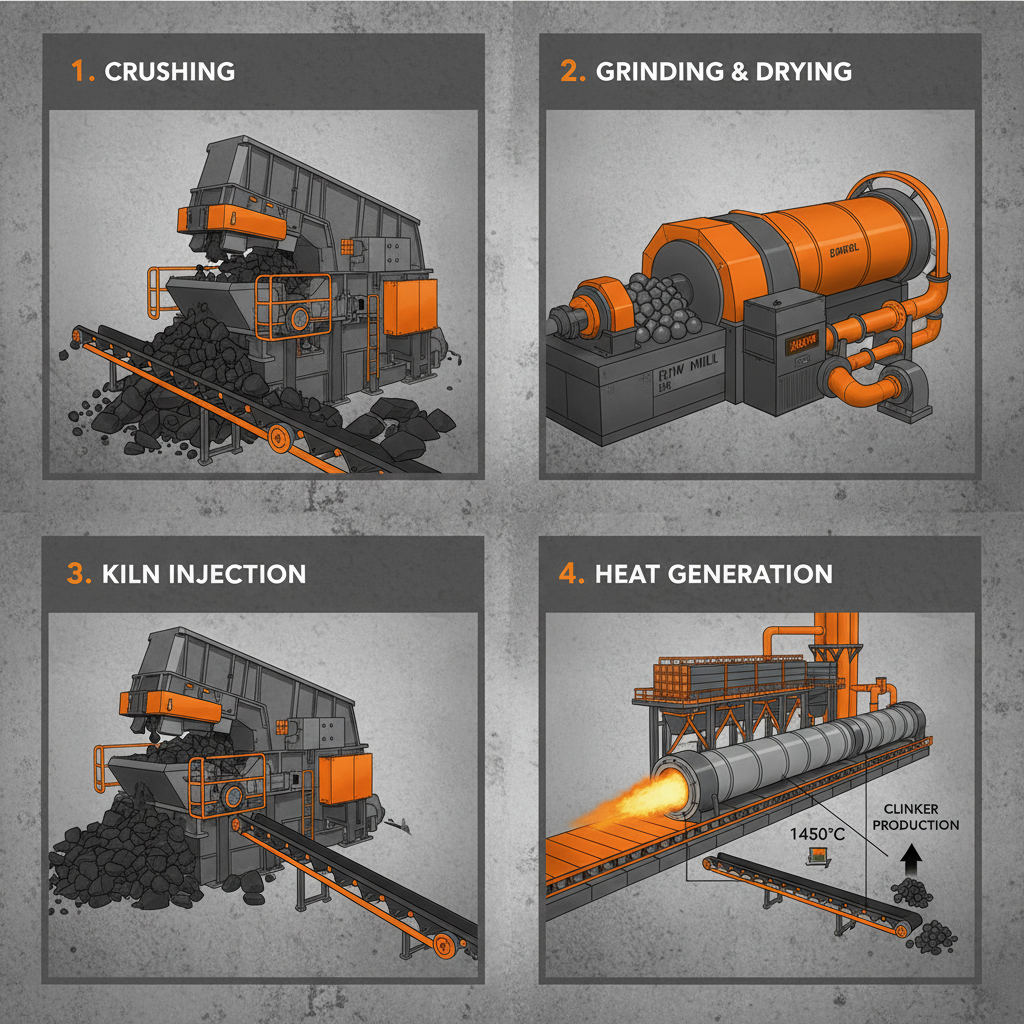
Petcoke, or petroleum coke, is a carbon-rich solid residue obtained from oil refining processes, specifically the cracking and coking of heavy crude oil. It's essentially a highly carbonaceous material with a relatively low sulfur content (depending on its source). The cement industry utilizes petcoke primarily as a fuel source for the kiln, where cement clinker is produced. Replacing traditional fuels like coal with petcoke offers several benefits, including higher calorific value, lower ash content, and, often, a lower cost. Its consistent properties also contribute to more stable kiln operation. NL Graphite provides high-quality petcoke suited for the demanding requirements of cement manufacturing.
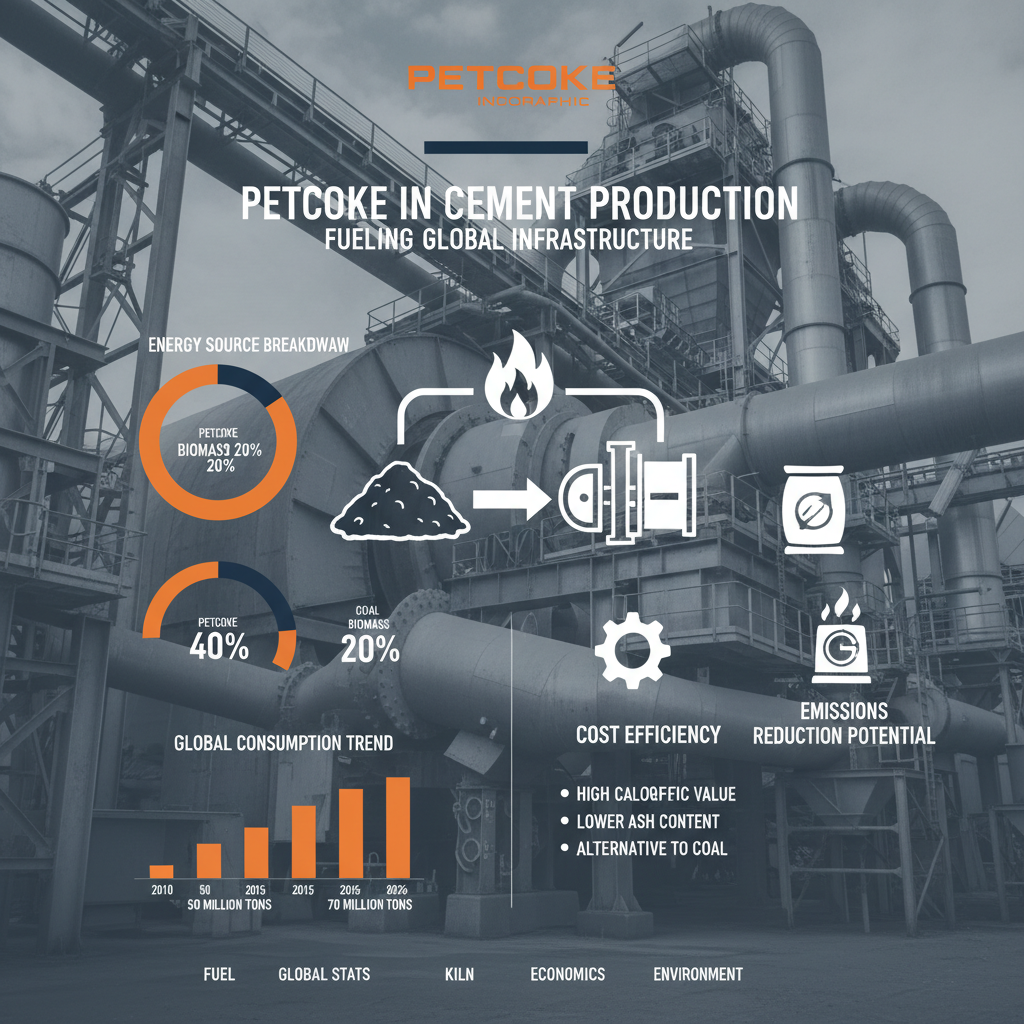
Key Benefits: Higher calorific value, lower ash content, cost-effectiveness, and consistent fuel properties.
Petcoke vs. Coal: A Comparative Analysis
Comparing petcoke to coal reveals significant differences that impact cement production efficiency and environmental performance. Coal, while traditionally used as a fuel source, has a higher moisture content and produces more ash, requiring more frequent cleaning and potentially impacting clinker quality. Petcoke generally boasts a higher heating value, meaning more energy is released per unit mass. Furthermore, depending on the source, petcoke can have a lower sulfur content, reducing SOx emissions. This makes it a more environmentally friendly option, although careful handling and emission control are still crucial.
Key Differences:
• Higher Heating Value (Petcoke)
• Lower Ash Content (Petcoke)
• Lower Moisture Content (Petcoke)
• Potentially Lower Sulfur Content (Petcoke)
Optimizing Petcoke Usage for Cement Quality
While petcoke offers numerous advantages, proper handling and combustion are vital to prevent negative impacts on cement quality. Uneven combustion can lead to unburnt carbon in the clinker, affecting its color and strength. The fineness of the petcoke grind significantly impacts its combustibility. Finer grinds promote faster and more complete combustion. Careful control of the kiln’s air-to-fuel ratio and temperature profiles are also critical. Regular monitoring of clinker properties, such as free lime and alkali content, is necessary to ensure consistent quality. NL Graphite’s petcoke offerings are tailored to meet the specific requirements of cement producers.
Environmental Considerations and Emission Control
While petcoke can be more environmentally friendly than coal, effective emission control is paramount. Combustion of petcoke can release particulate matter (PM), sulfur oxides (SOx), and nitrogen oxides (NOx). Implementing technologies such as electrostatic precipitators (ESPs), fabric filters, and selective catalytic reduction (SCR) systems are essential for minimizing these emissions. Proper handling and storage of petcoke are also crucial to prevent dust generation and water contamination. Continuous emission monitoring and adherence to environmental regulations are vital for sustainable operation.
Future Trends in Petcoke Utilization
The future of petcoke usage in the cement industry is linked to evolving environmental regulations and the search for alternative fuels. The increasing focus on carbon capture and storage (CCS) technologies could further enhance the sustainability of petcoke utilization. Research into pretreating petcoke to remove impurities and improve its combustion characteristics is ongoing. Furthermore, exploring co-processing petcoke with other waste materials could offer a circular economy approach to cement production. NL Graphite remains committed to supplying high-quality petcoke and supporting innovative solutions for the cement industry.
Conclusion: Petcoke as a Key Fuel for Sustainable Cement Production
Petcoke continues to be a vital fuel source for the cement industry, offering economic and operational benefits. However, responsible utilization through optimized combustion, emission control, and a commitment to sustainability are essential. As the industry evolves, NL Graphite is dedicated to providing high-quality petcoke and innovative solutions to support a more sustainable future for cement production.
Frequently Asked Questions (FAQs)
What are the typical sulfur content levels in petcoke used for cement production?
Sulfur content in petcoke varies depending on its source and the refining process. Generally, petcoke can range from less than 0.5% to over 3% sulfur. Lower-sulfur petcoke is preferred in cement production to minimize SOx emissions and meet stringent environmental regulations. However, even higher-sulfur petcoke can be utilized effectively with appropriate emission control technologies. NL Graphite offers petcoke with varying sulfur content levels to meet specific customer requirements, ensuring compliance with local regulations and optimal kiln performance.
How does petcoke storage impact its quality and usability?
Proper storage of petcoke is critical to maintain its quality and usability. Petcoke should be stored in a dry, well-ventilated area, protected from rain and moisture. Exposure to moisture can lead to oxidation and caking, reducing its calorific value and increasing handling difficulties. Covering the petcoke pile and minimizing exposure to the elements are essential. Furthermore, preventing contamination with other materials is crucial to avoid issues during combustion.
What is the role of particle size distribution in petcoke combustion?
Particle size distribution significantly influences petcoke combustion efficiency. A finer particle size promotes faster ignition, more complete combustion, and reduced unburnt carbon in the clinker. However, excessively fine particles can increase dust generation and pose handling challenges. An optimal particle size distribution ensures a balance between combustibility, dust control, and handling ease. NL Graphite offers petcoke with controlled particle size distributions to optimize combustion performance.
Are there any emerging alternatives to petcoke in the cement industry?
Several alternative fuels are being explored as potential replacements for petcoke in the cement industry. These include biomass, refuse-derived fuel (RDF), and alternative industrial wastes. While these alternatives offer environmental benefits, they often require modifications to existing kiln infrastructure and may present challenges related to fuel consistency and availability. The viability of these alternatives depends on factors such as cost, regulatory requirements, and logistical considerations.
 Pervious
 Next
Next